
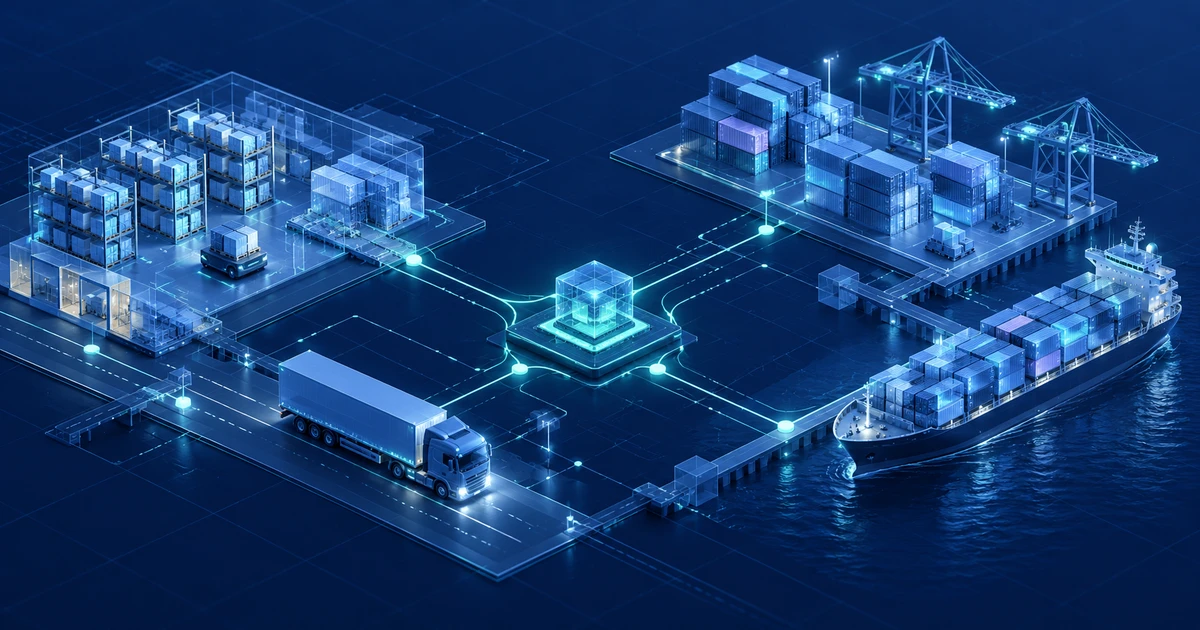
A late container creates several different problems. Someone must update the arrival estimate, check which orders depend on it, book replacement capacity and tell the customer what will happen next. A model that predicts the delay solves only one part of that chain.
That distinction helps explain the current AI logistics landscape. Forecasting and optimisation products now sit alongside agents that process freight communications, robots that inspect warehouse stock and driving systems that move goods. Their inputs, operating environments and definitions of success differ considerably.
This 2026 edition revisits our earlier AI in Logistics report and maps companies across seven areas of work. It covers product specialists, established vendors and acquired businesses, with a focus on what they offer and where the technology fits.
Research updated on 19 October 2026. Prepared by DataRoot Labs, an AI R&D and engineering company, from public product information, company disclosures and deployment accounts. This edition does not include hands-on product testing or company interviews. Results reported by a vendor or customer describe that deployment; they are not benchmarks for the whole category.
Go to the use-case map or the company catalogue.
Three features of the current landscape
Compared with the categories in our 2024 edition, this report gives more space to the work surrounding a shipment: quoting, phone calls, paperwork, appointments and exception handling. Companies such as Vooma, HappyRobot and Raft offer ways to connect those interactions with operational systems. The useful question is which steps they can complete reliably, including the handoff when a person needs to intervene.
Warehouse automation covers several stages of the physical workflow. Inventory-scanning systems and manipulation robots perform quite different jobs, but both bring observations from the floor into software. IKEA’s drone inventory programme and FedEx’s expanded trailer-loading deployment with Dexterity provide concrete examples, discussed below.
Finally, several names from the earlier landscape have become parts of larger businesses. Ingka acquired Locus in 2025; Skild AI acquired Zebra’s robotics business, formerly Fetch Robotics, in April 2026. Product continuity matters more than retaining every old startup as a separate row.
AI logistics use cases: from prediction to execution
“AI logistics software” can describe a demand model, a route optimiser, a document-processing service or a vehicle. The following map separates the operational task from the technology and the outcome worth measuring. These are evaluation dimensions, not claimed results for the companies below.
Scroll horizontally to explore all columns →
| Operational task | Typical approach and inputs | What to measure |
|---|---|---|
| Forecast demand and place inventory | Forecasting models using orders, sales, stock, promotions and lead times; optimisation converts forecasts into allocation or replenishment decisions. | Forecast error and bias alongside service level, stockouts and excess inventory. |
| Predict shipment delays | Models combine carrier events, telematics and contextual signals to estimate arrival times and flag exceptions. | Estimated time of arrival (ETA) error by prediction horizon and lane; coverage, false alerts and useful warning time. |
| Process freight documents | Optical character recognition (OCR), document models and language models extract information, match records and populate operational systems. | Field accuracy, share processed without manual review, review workload and downstream correction cost. |
| Coordinate calls and email | Voice and language models collect information and invoke workflow tools connected to a transport management system (TMS), inbox or scheduling system. | Completed tasks, incorrect actions, escalation rate and time to resolution. |
| Plan routes and dispatch | Optimisation uses orders, vehicle capacity, service times and delivery windows; learned estimates can supply travel or demand inputs. | On-time delivery, distance, utilisation and constraint violations on the actual operation. |
| Inspect inventory and handle parcels | Computer vision identifies goods or locations; robot planning and control execute scanning, picking, sorting or loading. | Inventory discrepancies resolved or successful handling cycles, including exceptions, downtime and human assistance. |
| Move freight autonomously | Perception, localisation, prediction and planning operate within defined routes and environmental conditions. | Safety and service performance within that operating domain; interventions and operational support. |
| Maintain vehicles and operate vessels | Sensor and operational data support condition models, anomaly detection and performance optimisation. | Useful warning time, missed failures, inspection accuracy or fuel performance under comparable conditions. |
One technical distinction is easy to lose in a product pitch: a forecast estimates what may happen; an optimiser chooses an action under constraints. A truck cannot exceed its capacity because a language model proposes a cheaper route. Google’s OR-Tools routing documentation illustrates how capacities, time windows and other constraints enter a routing problem. A language interface can help an operator work with that system, but it does not remove those constraints.
Three deployment examples, and what they establish
IKEA: checking what is physically in the warehouse
In its August 2024 account of the Verity programme, Ingka described more than 250 drones operating across 73 locations in nine countries. Those are the figures reported at that date, not an estimate of the fleet today. The same account described testing in Belgium of an upgraded system intended to work alongside employees.
The mechanism is specific: drones identify and photograph storage locations, navigate indoors and connect observations with inventory information. The operational value is a more frequent check of physical stock. It does not mean the drones pick orders or that every warehouse can adopt the same flight plan.
FedEx and Dexterity: loading varied packages into a trailer
In July 2026, FedEx and Dexterity announced an expanded deployment of Mech trailer-loading robots powered by Dexterity’s Foresight world model at the Hagerstown hub in Maryland, beyond the earlier pilot site. Loading combines perception, packing decisions, motion and physical contact: where a parcel fits is only part of the problem; the robot must also place it there.
The announcement establishes a named customer, location and expansion of the programme. It does not supply a general speed or payback benchmark for all package mixes. A different hub would still need to evaluate its parcels, flow, exceptions and integration with existing equipment.
Aurora: commercial service within a defined driving programme
In its 29 July 2026 shareholder update, Aurora reported driverless operations for Detmar Logistics between Midland and Monahans, Texas, along I-20. It separately described supervised testing of weigh-station navigation and on-route fueling. These are different operating milestones. Revenue, loads or miles can refer to different mixtures of service, and the operating domain determines where a driving system can be used.
Yard trucks, middle-mile box trucks, highway tractor-trailers and sidewalk robots therefore belong in separate operational conversations. The shared label “autonomous logistics” is too broad to establish equivalent readiness.
Generative AI in logistics: the work between systems
Much of a freight operator’s day lives in email, calls, attachments and portals. A carrier supplies an update in one channel, a customer asks a question in another, and the TMS needs a structured record. Language and document models can help here: interpreting an input and connecting it to the next step of a workflow.
The products vary. Vooma covers quoting and load workflows across communication channels. Levity combines communication analytics with automation. Stargo emphasises structured, reconciled transaction records. Expedock’s current offer combines specialised remote teams and AI-enabled operations, which is a different purchasing model from software alone.
For implementation, the critical boundary is the action the system may take. Reading an invoice, creating a draft booking and accepting a commercial commitment require different controls. A useful evaluation set should include missing fields, conflicting attachments, a changed appointment and a request that belongs to another shipment. The record of an automated action should show the input, the selected shipment, the action taken and any human approval.
Duplicate messages and retries also matter. The same request arriving twice should not silently create two bookings. When a workflow cannot finish, the handoff should carry the relevant documents and state so an operator can continue without reconstructing the conversation. These integration details can determine the value of an agent as much as the language model behind it.
The 2026 company landscape
The catalogue groups companies by the main task discussed here; several span more than one category. “Software platform” describes the commercial form of the offering, not a promise that it can be installed locally. Physical systems and managed services have different deployment requirements. The selection is a map of approaches, not a performance ranking.
57 companies across seven areas. Follow a category to read the product profiles.
- Forecasting and planning · 6 companies
- Visibility, risk and trade · 6 companies
- Freight workflows and documents · 9 companies
- Routing and last-mile delivery · 6 companies
- Warehouse robotics and inventory · 15 companies
- Autonomous freight and delivery · 7 companies
- Fleet and maritime operations · 8 companies
Forecasting and planning
6 companies
Scroll horizontally to explore all columns →
| Company | Product and application | Offering |
|---|---|---|
| 7bridges ↗ | Network design and freight cost. Builds a logistics digital twin from shipment and carrier data. Teams can simulate changes to their network, examine service and cost trade-offs, and audit freight bills before changing how shipments are allocated. | Software platform |
| Aera Technology ↗ | Supply chain decisions. Aera connects enterprise data with analytics and decision workflows, including inventory allocation and supply planning. Its Skills package recurring decisions into applications that can recommend or execute actions within configured business processes. | Software platform |
| Alloy.ai ↗ | Retail demand signals. Harmonises point-of-sale, inventory and enterprise data for consumer goods brands. Forecasting and exception workflows connect what is selling at a retailer with the stock and replenishment decisions made further up the supply chain. | Software platform |
| Optimal Dynamics ↗ | Truckload planning. Its Transportation Decision System evaluates load acceptance, dispatch and fleet positioning under uncertainty. Developed from research in planning under uncertain conditions, it targets truckload operators making interconnected decisions across their network. | Software platform |
| RELEX ↗ | Demand and replenishment. Combines demand forecasting, replenishment, inventory and production planning for retailers, wholesalers and manufacturers. Its planning scope reaches upstream from the warehouse: product availability, promotions and stock decisions determine the volumes that transport and fulfilment teams must handle. | Software platform |
| ThroughPut ↗ | Bottlenecks and inventory. Connects demand, inventory and operational data to identify constraints across a supply chain. Applications include demand sensing, replenishment and logistics planning, with an emphasis on deciding which bottleneck to address first. | Software platform |
Visibility, risk and trade
6 companies
Scroll horizontally to explore all columns →
| Company | Product and application | Offering |
|---|---|---|
| Altana ↗ | Trade and supplier networks. Maps relationships between products, companies and shipments using a supply chain knowledge graph. Applications include tracing upstream suppliers, trade compliance and understanding how changes in sourcing or tariffs affect a product’s journey. | Data and software platform |
| Everstream Analytics ↗ | Supply chain risk. Combines supply network mapping, external event monitoring and predictive risk analytics. It helps teams relate weather, disruption and supplier exposure to their own operations; the service includes human intelligence alongside AI and natural-language processing. | Software and analyst intelligence |
| FourKites ↗ | Visibility and execution. Connects shipment, facility and network data to a supply chain digital twin. Its current product direction extends visibility into AI-assisted execution, using operational context to coordinate work around disruptions and recurring logistics tasks. | Software platform |
| Portcast ↗ | Ocean visibility and freight spend. Links container tracking and predictive arrival information with orders, contracts and invoices. Teams can investigate delay exposure, detention and demurrage, and invoice discrepancies with the shipment’s operational history in view. | Software platform |
| project44 ↗ | Shipment visibility. Movement brings together shipment tracking, predictive delivery information and operational workflows across transport modes. The platform connects carrier and facility data so teams can investigate exceptions and coordinate responses around the same shipment record. | Software platform |
| Shippeo ↗ | Predictive arrival times. Aggregates transport events and telematics to estimate arrival times and identify delivery exceptions. Its AI products build on that visibility layer; coverage and prediction quality still need to be assessed for the buyer’s actual carriers and lanes. | Software platform |
Freight workflows and documents
9 companies
Scroll horizontally to explore all columns →
| Company | Product and application | Offering |
|---|---|---|
| Augment ↗ | Cross-channel freight workflows. Augie works across calls, email, messages and operational systems for brokers, carriers and distributors. Augment positions it as a shared assistant for connected workflows, including quoting, appointments and follow-up, rather than a tool for a single communication channel. | Software platform |
| Expedock ↗ | Freight back-office work. Expedock’s current offering combines specialised remote teams with AI-enabled workflows. It covers shipment operations, documentation, billing and back-office work. Buyers should distinguish this managed-service model from purchasing standalone document-extraction software. | Managed operations with AI |
| HappyRobot ↗ | Voice and operational agents. Builds AI workers that communicate with counterparties and carry out operational workflows. Logistics applications include calls, information collection and coordination; the platform combines these interactions with system connections and controls for enterprise deployment. | Software platform |
| Levity ↗ | Logistics communication. Analyses logistics email traffic to identify request types, handoffs and repeated work, then connects selected flows to automation. Its current positioning brings communication analytics and execution together, rather than treating each incoming email as an isolated classification task. | Software platform |
| Loadsmart ↗ | Transportation execution. Combines ShipperGuide TMS, dock and yard software, freight services and AI agents. The agent offering covers tasks such as document collection, shipment tracking, appointment scheduling and load audits within a broader transportation operation. | Software and freight services |
| Parade ↗ | Carrier procurement. Uses carrier data and automated outreach to help freight brokers find capacity and cover loads. Parade joined Mudflap in April 2026, so its capacity-management products should be understood within that combined business. | Software platform |
| Raft ↗ | Freight documents and operations. Automates workflows for freight forwarders and customs brokers, including document processing, accounts payable and shipment operations. Its AI agents work across the shipment lifecycle through connections to transport management systems and the documents operators already receive. | Software platform |
| Stargo ↗ | Document interpretation. StarDox turns emails, PDFs, spreadsheets and other unstructured inputs into structured transaction records. It applies validation and reconciliation to workflows such as freight quotations and invoices, where a usable record requires more than extracting text. | Software platform |
| Vooma ↗ | Quoting and load operations. Combines email, voice and workflow automation for freight brokers and carriers. Products help quote and build loads, schedule appointments, cover freight and track shipments while integrating the resulting information with existing systems. | Software platform |
Routing and last-mile delivery
6 companies
Scroll horizontally to explore all columns →
| Company | Product and application | Offering |
|---|---|---|
| Bringg ↗ | Delivery orchestration. Connects planning, routing, dispatch and driver management for retailers and logistics providers. Alongside its platform, the Bringg Network provides a single integration to external delivery capacity, including third-party and crowdsourced fleets. | Software platform |
| FarEye ↗ | Last-mile delivery. Connects order promises, routing, dispatch and delivery execution across owned and contracted capacity. FarEye also offers AI-assisted operational workflows, with delivery performance measured across the journey from checkout to proof of delivery. | Software platform |
| Locus ↗ | Dispatch and routing. Uses optimisation and operational data for route planning, fleet allocation and delivery execution. Ingka Group acquired Locus in 2025; the product continues to serve enterprise logistics operations. | Software platform |
| LogiNext ↗ | Delivery planning and execution. Plans routes, allocates delivery work and tracks fulfilment for enterprise fleets. Its products combine optimisation with delivery operations, including dispatch, estimated arrival times and communication across first-, middle- and last-mile workflows. | Software platform |
| Package.ai ↗ | Delivery and customer engagement. Combines last-mile planning with conversational AI for home-furnishing retailers and service businesses. Delivery scheduling, customer messages and post-purchase interactions share operational context, including the requirements of bulky-item deliveries. | Software platform |
| Shipsy ↗ | Transport and warehouse workflows. Combines transport, warehouse, routing and freight-management products. Its AI worker offering sits alongside those systems to handle operational tasks and communications; deployment scope depends on which modules and integrations a logistics team adopts. | Software platform |
Warehouse robotics and inventory
15 companies
Scroll horizontally to explore all columns →
| Company | Product and application | Offering |
|---|---|---|
| Ambi Robotics ↗ | Parcel sorting and stacking. Builds systems such as AmbiSort and AmbiStack for parcel handling. Its approach uses simulation-trained AI and robotic perception to deal with varied packages, connecting learned manipulation skills with the physical constraints of sorting operations. | Installed robotic systems |
| Berkshire Grey ↗ | Picking, sorting and handling. Develops AI-enabled robotic picking, sorting and movement systems for retail, e-commerce and logistics. It is part of SoftBank following the completed 2023 acquisition, rather than an independent startup. | Integrated robotic systems |
| Dexory ↗ | Warehouse inventory visibility. Uses autonomous mobile robots to collect warehouse inventory data and build a digital view through DexoryView. It compares physical observations with system records so teams can find misplaced stock, discrepancies and operational gaps. | Scanning robots and software |
| Dexterity ↗ | Trailer loading and manipulation. Develops robotic manipulation systems and a world model for planning physical actions. Its Mech trailer-loading system is part of an expanded FedEx deployment announced in July 2026. | Installed robots and AI software |
| Fizyr ↗ | Robotic vision and manipulation. Provides computer vision for robots handling variable parcels and objects. Its software identifies objects and grasp opportunities for applications such as picking, depalletising and parcel handling, working with integrators and robotic hardware partners. | Perception software |
| Gather AI ↗ | Inventory monitoring. Captures warehouse inventory observations using drones and cameras on forklifts. Its software connects those observations with inventory records to surface discrepancies and priorities for warehouse teams; the approach monitors goods both at rest and in motion. | Vision systems and software |
| Geek+ ↗ | Warehouse movement and retrieval. Offers mobile robotic systems for goods-to-person picking, storage and internal movement. Its software coordinates robots and inventory flows across warehouse layouts, with different configurations for the goods and throughput a facility needs to handle. | Installed robotic systems |
| GreyOrange ↗ | Warehouse orchestration. GreyMatter coordinates work across warehouse robots and fulfilment processes. GreyOrange combines orchestration software with robotic automation, allowing the execution layer to allocate tasks and respond to changing order priorities. | Software and mobile robotics |
| Hai Robotics ↗ | Automated storage and retrieval. HaiPick systems retrieve and move inventory for goods-to-person workflows. The range includes high-density storage configurations and HaiPick Climb, combining specialised hardware and control software rather than a general-purpose robot for every warehouse task. | Installed robotic systems |
| Locus Robotics ↗ | Warehouse picking and movement. Coordinates mobile robots with workers and warehouse systems for fulfilment and internal transport. LocusONE manages fleets and workflows across multiple robot types. This is a different company from the routing-software provider Locus. | Mobile robots and orchestration |
| Nimble ↗ | Robotic fulfilment. Combines robotic picking and handling technology with fulfilment services. The commercial offer is an operated logistics network, so evaluating Nimble involves service coverage and order execution as well as the capabilities of its robots. | Managed fulfilment network |
| Pickle Robot ↗ | Trailer unloading. Builds robots that unload mixed freight from trailers onto a conveyor. The system combines perception, manipulation and motion planning for a physically demanding warehouse task; handling performance depends on the actual package mix and trailer conditions. | Installed robotic system |
| Skild AI ↗ | Robot intelligence and warehouse automation. Develops a general robot-control model and applications for physical tasks. Its April 2026 acquisition of Zebra’s robotics business, formerly Fetch Robotics, connects that work with an established warehouse mobile-robot operation. | Robot software and installed systems |
| Symbotic ↗ | Distribution-centre automation. Combines storage, mobile robotics, handling and AI-enhanced control software in large warehouse automation systems. Its deployments are infrastructure projects: facility integration and material flow matter alongside individual robot performance. | Integrated warehouse system |
| Verity ↗ | Inventory checks. Uses indoor autonomous drones to photograph and identify storage locations, then reconcile inventory information. IKEA’s account of its deployment describes both the earlier rollout and testing of drones working alongside employees. | Autonomous drones and software |
Autonomous freight and delivery
7 companies
Scroll horizontally to explore all columns →
| Company | Product and application | Offering |
|---|---|---|
| Aurora ↗ | Highway freight. Develops and operates the Aurora Driver for freight transport. Its second-quarter 2026 update distinguishes driverless operations from supervised work as it expands commercial service. | Autonomous trucking operations |
| Einride ↗ | Electric and autonomous freight. Combines electric trucks, charging, its Saga operating software and autonomous vehicles. Electrification and autonomy are separate parts of the offer: an electric shipment should not automatically be counted as a driverless shipment. | Transport services and software |
| ISEE ↗ | Trailer movements in yards. Automates yard-truck movements at logistics facilities. The operating environment includes trailers, loading areas and mixed traffic within a site; yard autonomy has a different operating scope from public-road linehaul. | Autonomous yard vehicles |
| Kodiak AI ↗ | Industrial and highway freight. Builds the Kodiak Driver for heavy vehicles, with driverless industrial operations and a separate highway programme. Those settings have different operating conditions and rollout milestones; evidence from an industrial route does not establish the status of every highway service. | Autonomous driving system |
| PlusAI ↗ | Autonomous truck software. Develops SuperDrive virtual-driver software for factory-built autonomous trucks. Its model centres on integration with truck manufacturers and partners, making vehicle programmes, validation and rollout schedules important parts of the deployment picture. | Vehicle software with OEM partners |
| Serve Robotics ↗ | Sidewalk delivery. Develops and operates sidewalk robots for last-mile delivery. Its service combines onboard autonomy with operational support and integrations with delivery platforms, within the areas where the robots are deployed. | Delivery robot service |
| Venti Technologies ↗ | Ports and logistics hubs. Provides autonomous driving technology for vehicles operating in ports, yards and other industrial logistics sites. Its focus is coordinating goods movements within complex hubs, including interactions with existing traffic and fleet-management systems. | Autonomous vehicle systems |
Fleet and maritime operations
8 companies
Scroll horizontally to explore all columns →
| Company | Product and application | Offering |
|---|---|---|
| Bearing AI ↗ | Maritime performance and intelligence. Applies models to maritime data for forecasting, simulations and operational decisions. Its current platform spans shipping performance and market intelligence, including questions about vessel behaviour, tonnage supply and freight-rate scenarios. | Software platform |
| DeepSea ↗ | Vessel performance. Models vessel performance from operational data and supports voyage optimisation. Its products connect monitoring with decisions about speed, routing and fuel use. DeepSea joined the Nabtesco Group in 2023. | Software platform |
| Motive ↗ | Fleet safety and management. Connects AI dashcams, vehicle telematics and fleet-management workflows. Video events and operating data support driver coaching, safety review and asset operations; implementation also involves policies for access to employee and vehicle data. | Connected devices and software |
| Orca AI ↗ | Maritime situational awareness. Combines visual sensing with AI to detect and prioritise maritime targets. SeaPod supports the bridge team, while fleet-level tools analyse operational information. Navigation assistance and a fully autonomous vessel are different deployment claims. | Onboard vision and fleet software |
| Samsara ↗ | Fleet safety and operations. Combines vehicle telematics, cameras and operational software. AI-based video analysis supports safety events and coaching workflows, while vehicle and equipment data give fleet teams a shared view of assets and maintenance needs. | Connected devices and software |
| Uptake ↗ | Vehicle health. Analyses vehicle and equipment data to identify maintenance risks and prioritise interventions. Bosch announced plans to acquire Uptake in March 2026. | Predictive-maintenance software |
| UVeye ↗ | Vehicle inspection. Uses cameras and computer vision to inspect a vehicle’s underbody, tyres and exterior as it passes through a scanning installation. For fleet operators, the output is an inspection record that can feed maintenance and condition-review workflows. | Drive-through scanning systems |
| Windward ↗ | Maritime risk and visibility. Analyses vessel movements and other maritime signals to identify behaviour, exposure and operational risk. Commercial applications include vessel screening, container visibility and business intelligence, alongside the company’s government and security work. | Data and software platform |
Where some of the earlier names went
Acquisitions change the landscape without necessarily removing the product. These examples explain why an earlier brand may now appear under another organisation.
Scroll horizontally to explore all columns →
| Earlier name | Documented change |
|---|---|
| Fetch Robotics | Zebra acquired Fetch in 2021. In April 2026, Skild AI acquired Zebra’s robotics business, including the former Fetch operation. |
| BlueNode | Everstream announced the acquisition in April 2023, bringing intermodal data cleansing and integration into its wider offering. |
| Ware | Gather AI acquired Ware in 2023, consolidating two warehouse-inventory drone businesses. |
| Parade | Parade joined Mudflap in April 2026; its brokerage capacity-management products remain relevant within the combined company. |
| Locus | Ingka Group acquired the logistics software company in October 2025. This transaction concerns Locus, not Locus Robotics. |
The original report also covered businesses outside this edition’s narrower focus, including passenger mobility, general consulting and procurement. Their absence from the current catalogue is not a statement that they have closed.
What still makes deployment difficult
Data that describes the operation consistently
A shipment ID, a purchase order, a carton and a pallet describe different objects. Connecting them is essential before an alert can identify the affected customer or an agent can update the correct record. Teams also need to know whether an event is late, missing or merely stale. A model can produce a convincing answer while working from the wrong operational state.
Evaluation at the level of the decision
Average accuracy can conceal expensive failures. An ETA model should be evaluated at the horizons when a dispatcher can still act, and across the lanes it will actually serve. A document model should be checked on critical fields and the consequences of a wrong value. A picking system needs results for the package distribution at the target facility, including difficult items and human interventions.
Integration, exception handling and ownership
A successful prediction is not yet a completed task. Someone must own the response, the integration must permit it, and failures must be recoverable. For physical automation, this includes maintenance, site changes, staff training and safe handling of exceptions. The cost assessment should count the people supporting interventions and the time equipment is unavailable. If a product flags driver or worker behaviour, the operator also needs a process for reviewing an incorrect flag. For software agents, it includes permissions, review queues and access to commercially sensitive or personal data.
For a first deployment, a bounded workflow makes these questions concrete: one document family, one inventory zone, one class of shipment exception or one set of routes. Establish the current service level and workload, then measure whether the new process improves them after accounting for reviews and failures. That produces a decision an operations team can use when expanding to the next site or workflow.

Yuliya Sychikova ↗
COO @ DataRoot Labs
Yuliya is a co-founder and COO of DataRoot Labs, where she oversees operations, sales, communication, and Startup Venture Services. She brings onboard business and venture capital experience that she gained at a leading tech investment company in CEE, where she oversaw numerous deals and managed a portfolio across various tech niches including AI and IT service companies.

Max Frolov ↗
CEO @ DataRoot Labs
Max Frolov is a co-founder and CEO of DataRoot Labs, which he started in 2014 while getting his Masters Degree in Theoretical and Mathematical Physics at Kyiv Polytechnic University. Aspiring to widen Ukraine’s capabilities in Data Science, two years later, he has co-launched DataRoot University, Ukraine’s leading Data Science school which has graduated over 1K young experts and employed over 80% of them. Max is a recipient of KyivPost Top 30 under 30 award. Aside from work, Max enjoys running, Judo, and brainstorming new product ideas.

Ivan Didur ↗
CTO @ DataRoot Labs
Ivan Didur is a co-founder and CTO of DataRoot Labs. As the head of technology, Ivan manages the entire tech team, designs projects architecture, and makes critical technology decisions. He has extensive hands-on experience in all core AI technologies, including Computer Vision, Natural Language Processing, and Deep Reinforcement Learning. He eagerly tries every new AI technology and method in DataRoot research lab and if it passes his high bar, it imminently gets into production on one of our cases. Additionally, Ivan actively mentors aspiring Data Scientists at the DataRoot University.