




DRL — DataRoot LabsConnect

The depth to invent. The engineering to deliver.

Three connected laboratories form one R&D center. Agentic is selected. R&D CENTER
IBM
Outrider
Embodied / Moxie
Databand, an IBM company
OLX Group
Wisdom
Kami Computing
Cognyte

Explore our laboratories

Agentic Lab.

The control loop around the model

From single-shot agents that rewrite, classify and validate in one pass to conversational sessions and coordinated agent teams — with checkpoints, recovery and human handoff.

  • Long-running tasks
  • Human handoff

Scoped actions in business systems

Connect agents to client systems through typed tools—schema-validated outputs written to databases, API and browser actions inside access boundaries.

  • Access boundaries
  • Schema-validated output

Evidence-grounded context and memory

Retrieve and reconcile information across private sources—temporal graphs, context selection and traceable answers with explicit uncertainty.

  • Source attribution
  • Context selection

Proof the agent works

Validation sets agreed before work starts, outcome consistency across repeated trials, and trace analysis in production.

  • Validation sets
  • Outcome consistency
Specializations +
  • Conversational & voice agents
  • Tool integration & ML platform engineering
  • Agent harness & orchestration design
  • Retrieval, knowledge graphs & agent memory
  • Agent evaluation & validation-set engineering
  • Document rewriting, classification & entity extraction

Research directions

  • Harness engineeringLong tasks, checkpoints and recovery
  • Context & memoryTemporal graphs and context selection
  • Agent evaluationOutcome consistency across repeated trials
  • Agent securityPrompt-injection containment and least-privilege identity

Toolbox

Harness

Agent harnessesDeep Agents · LangGraph · DSPy · Pydantic AI · Agno
Agent frameworksOpenAI Agents SDK · Google ADK · Agent Framework · smolagents · CrewAI
Durable executionTemporal · Restate · E2B · Inngest · DBOS
Realtime interactionLiveKit Agents · Pipecat · WebRTC · Vercel AI SDK · CopilotKit
Speech interfacesWhisper · FunASR · CosyVoice · Chatterbox · Kokoro
InteroperabilityMCP · A2A · AG-UI · FastMCP · MCP Inspector

Tools & actions

Data contractsPydantic · JSON Schema · Zod · Instructor · BAML
Tool integrationsFastMCP · Composio · Nango · Arcade · Zapier MCP
Browser automationPlaywright · Browser Use · Stagehand · Skyvern · Browserbase
Execution isolationModal · Daytona · Firecracker · E2B · gVisor
Guardrails & access controlNeMo Guardrails · Guardrails AI · LLM Guard · Presidio · OpenFGA
Operational dataPostgreSQL · Redis · ClickHouse · DuckDB · Supabase

Context & memory

Vector searchQdrant · Weaviate · Milvus · pgvector · LanceDB
Document ingestionDocling · Unstructured · Apache Tika · MinerU · marker
Embedding modelsBGE-M3 · GTE · Qwen3 Embedding · Sentence Transformers · ColBERT
Knowledge graphs & memoryNeo4j · FalkorDB · Graphiti · Zep · Mem0
Retrieval pipelinesLlamaIndex · Haystack · txtai · RAGFlow · LightRAG
Hybrid & full-text searchVespa · Elasticsearch · OpenSearch · Typesense · Meilisearch

Evaluation

Agent evaluationsInspect AI · τ²-bench · Terminal-Bench · OSWorld · SWE-bench
Output & retrieval evaluationRagas · DeepEval · Promptfoo · TruLens · Braintrust
Validation sets & annotationArgilla · Label Studio · doccano · Prodigy · Cleanlab
Prompt optimizationDSPy · GEPA · TextGrad · AdalFlow · Ax
Trace analysisLangfuse · Phoenix · OpenTelemetry · OpenLLMetry · Logfire
Security & red teaminggarak · PyRIT · Giskard · Promptfoo · LLM Guard

Deep Learning Lab.

Policies that turn perception into action

Train and adapt robot policies for navigation, manipulation and long-horizon tasks using demonstrations, reinforcement learning and vision-language-action models.

  • Partial observability
  • Sim-to-real transfer

Understanding across sensors and modalities

Build synchronized data capture and train models that fuse live RGB, thermal, acoustic and LiDAR streams for detection, tracking and scene understanding.

  • Sensor alignment
  • Missing modalities

Model performance on your target hardware

Optimize models and runtimes across GPUs, CPUs and NPUs—from cloud servers to mobile, Jetson, Raspberry Pi and Hailo-based devices.

  • Latency & throughput
  • Memory & power

Training data and simulated worlds

Build curated datasets and realistic sensor and physics simulations. Use generative models and world models to expand training coverage and explore rare scenarios.

  • Scenario coverage
  • Simulation fidelity
Specializations +
  • LLM, VLM, VLA & generative model training
  • Multisensor capture & multimodal ML
  • RL & robotics research
  • Inference optimization across hardware
  • Data engineering & physics simulation

Research directions

  • Learning from feedbackRL post-training, reward design and sample efficiency
  • Multimodal world modelsSensor fusion, temporal reasoning and predictive simulation
  • Efficient adaptationDistillation, quantization and hardware-aware training

Toolbox

Autonomy

Robot foundation modelsopenpi · Isaac GR00T · OpenVLA · Octo · SmolVLA
Imitation & visuomotor learningLeRobot · robomimic · Diffusion Policy · ACT · RDT-1B
Reinforcement learningTorchRL · RSL-RL · skrl · RLlib · Stable Baselines3
Environments & rolloutsIsaac Lab · Gymnasium · PettingZoo · EnvPool · VMAS
Planning & controlNav2 · MoveIt 2 · cuRobo · Drake · acados
Policy evaluationLIBERO · RoboCasa · CALVIN · ManiSkill · SimplerEnv

Perception

Sensor acquisition & replayROS 2 · GStreamer · MCAP · Foxglove · Lab Streaming Layer
Calibration & state estimationOpenCV · Kalibr · GTSAM · Ceres Solver · OpenVINS
Visual perception & anomaliesDINOv3 · SAM 3 · Grounding DINO · Anomalib
Multimodal model adaptationQwen3-VL · Qwen3-Omni · InternVL · Transformers · PEFT
3D perception & sensor fusionOpen3D · MMDetection3D · OpenPCDet · spconv · BEVFusion
Audio & acoustic learningNVIDIA NeMo · SpeechBrain · ESPnet · CLAP · pyroomacoustics

Inference

GPU kernels & compilersCUDA · ROCm · Triton · CUTLASS · Apache TVM
GPU inference & servingTensorRT · TensorRT-LLM · vLLM · SGLang · Triton Inference Server
Apple siliconMetal · MLX · Core ML · MPSGraph · llama.cpp
CPU & mobile runtimesONNX Runtime · ExecuTorch · LiteRT · MNN · XNNPACK
Edge & NPU deploymentHailoRT · Qualcomm QNN · OpenVINO · RKNN-Toolkit2 · NVIDIA JetPack
Compression & profilingtorchao · NVIDIA Model Optimizer · LLM Compressor · Nsight Systems · Instruments

Data & simulation

Physics & robot dynamicsIsaac Sim · MuJoCo · Newton · Genesis · PyBullet
Environments & sensor simulationUnreal Engine · NVIDIA Omniverse · CARLA · Gazebo · pyroomacoustics
Synthetic data & demonstrationsReplicator · BlenderProc · Kubric · Infinigen · Isaac Lab Mimic
Generative model adaptationFLUX · Wan · MiniMax H3 · LTX-2 · Stable Audio Open
World models & predictive learningNVIDIA Cosmos · DreamerV3 · TD-MPC2 · V-JEPA 2 · DIAMOND
Dataset engineering & curationFiftyOne · Label Studio · Ray Data · WebDataset · DVC

Engineering Lab.

Products, APIs and integrations

Build SaaS products, internal tools and APIs for AI, and connect them to the systems you already run. Mobile apps when the product needs them.

  • Peak traffic
  • Third-party APIs

Cloud platforms and models in production

Build, migrate and right-size cloud platforms on AWS and Google Cloud, then serve, monitor and retrain models on them.

  • Cloud spend
  • Model drift

Data pipelines at scale

Design batch and streaming pipelines that ingest, process and serve large data volumes reliably, from raw events to analytics and model-ready datasets.

  • Data freshness
  • Backfills at scale

Connected devices and embedded AI

Integrate sensors, firmware, edge inference and robotics when an AI product needs a physical component.

  • Power & latency budgets
  • Intermittent links
Specializations +
  • AI-powered SaaS built from scratch
  • High-load APIs and backend services
  • Batch and streaming data pipelines
  • Cloud migrations and cost reduction
  • Production MLOps and LLM operations
  • Integration with existing systems

Research directions

  • Data at scaleStreaming pipelines and real-time analytics
  • LLM operationsCost, latency and quality tracking for LLMs
  • Platform efficiencyAutoscaling and GPU cost optimisation
  • On-device intelligenceQuantisation and edge inference

Toolbox

Product engineering

Backend servicesPython · FastAPI · gRPC
Product interfacesVue · React · TypeScript
Mobile appsCapacitor · React Native
Operational dataPostgreSQL · Redis
API & messagingREST / OpenAPI · Webhooks · RabbitMQ
Testing & deliverypytest · Playwright · GitHub Actions

Cloud & MLOps

Cloud providersAWS · Google Cloud
Infrastructure & accessTerraform · Helm · Tailscale
Orchestration & autoscalingKubernetes · Karpenter
ServerlessAWS Lambda · Cloud Run
Model serving & trackingKServe · MLflow
ObservabilityPrometheus · Grafana · OpenTelemetry

Data engineering

Ingestion & CDCDebezium · Airbyte
Stream processingApache Kafka · Apache Flink
Batch & orchestrationApache Spark · Airflow
Transformation & qualitydbt · Great Expectations
Analytical storageClickHouse · BigQuery · PostgreSQL
Python data processingPandas · Polars · DuckDB

Hardware & IoT

Embedded & firmwareZephyr · FreeRTOS · ESP-IDF
Edge inferenceTensorRT · ExecuTorch · llama.cpp
Device connectivityMQTT · Zenoh · AWS IoT Core
Robotics middlewareROS 2 · Nav2 · MoveIt 2

Built through partnership.

From autonomous logistics to human–robot interaction.

R&D partnerships.

Choose the focus: a research question, a product or sustained R&D capacity.

Research partnership

Validate a hypothesis.

Can this approach work for our problem?

DRL’s role
Design experiments, build baselines and test feasibility against agreed criteria.
You get
Evidence for a go / no-go decision, with reproducible experiments.
Organised around
A defined research question

Product co-building

Build the product.

How do we turn this concept into a working system?

DRL’s role
Co-develop the technical core with your team, from prototype to deployment.
You get
A working product or subsystem, with code, evaluation and handover.
Organised around
A shared product roadmap

Dedicated R&D team

Expand your capacity.

How do we sustain more R&D without rebuilding our team?

DRL’s role
Form a dedicated DRL team that works with your technical leads and priorities.
You get
Continuity of expertise and delivery across successive R&D milestones.
Organised around
An ongoing R&D programme

Each model integrates with your team. Scope, responsibilities and IP are agreed before work starts. Partnership Q&A

DRL AI Space.

AI grounded in
fundamental science.

Our long-term commitment to education and science in Ukraine. With Kyiv Polytechnic Institute and UFTM, we develop and test programmes that bring AI into fundamental and technical disciplines.

The initiative at KPI
Mural detail on a Kyiv Polytechnic Institute building: figures reaching towards a radiant central form.

Established

A space for science.

Opened in December 2025 at KPI. A shared setting for teaching, scientific computation and AI research.

In development

AI for theoretical physicists.

Our next programme connects fundamental physics, computational methods and modern AI practice.

Future direction

Beyond physics.

Extend the approach to chemistry, biology and other scientific and technical disciplines.

Built togetherDataRoot LabsIgor Sikorsky KPI ↗UFTM ↗

Before we build together.

What kinds of challenges are a good fit for DRL?

DRL is a fit when a product depends on solving a difficult technical problem: improving a learning system, making an agent reliable, or integrating AI into a working product. Our labs combine applied research with engineering across models, data, software and hardware. The scope can be a focused investigation, a critical subsystem or an ongoing R&D programme.

Can you take responsibility for part of a larger R&D programme?

Yes. We can take on a defined research or engineering workstream alongside your team and other partners. We agree a technical lead, interfaces and acceptance criteria. Your team retains product priorities and architecture decisions; DRL coordinates the lab expertise needed within our scope.

Can we start before we know which approach will work?

Yes. We start with a technical discussion involving the researchers and engineers proposed for the work. Together, we review the objective, operating constraints, available data and existing systems. The first phase can establish a baseline, test feasibility and determine whether existing technology is sufficient or further research is needed.

What do we get from a research phase?

The result is evidence for a technical decision, supported by the agreed research artefacts. These may include reproducible experiments, an evaluation suite, datasets, model artefacts or a prototype. We document the findings, limitations and recommended next step so your team can assess what to build, change or investigate further.

What happens if the approach does not work?

An experiment can rule an approach out. We agree the criteria for continuing, changing direction or stopping before committing to larger experiments. If a hypothesis fails, the result should explain what was tested, where the approach reached its limits and what the evidence suggests doing next.

How do you validate a system for real-world use?

We test against agreed operating conditions, including representative data, failure cases, latency and resource constraints. For a deployed system, validation also covers integration, failure recovery and operation in the target environment. Your team and ours define the evaluation and release criteria before a deployment decision.

How do you set budgets and timelines when research outcomes are uncertain?

We agree the scope, budget and timeframe for each phase, including engineering effort, compute and data costs. Research milestones are tied to specific experiments and decisions. Changes to scope or assumptions trigger a review of the plan and budget before further work is committed.

How do you protect our data and proprietary know-how?

Before work starts, we agree approved environments, access permissions, model endpoints and data-handling requirements. Partner-confidential material is shared only with appropriate permission. The engagement also defines what may be reused or disclosed, including any use of project results in publications or case studies.

Who owns the results of our work together?

We distinguish project-specific results from existing know-how, reusable components and third-party technology. Ownership, licences and permitted reuse are agreed before work starts. The agreement specifies what you own, what you may use and any restrictions attached to the technologies involved.

Can our team continue the work independently?

We plan handover around your team reproducing the results and running the agreed system in its own environment. The scope covers the necessary code, permitted model artefacts, experiment records, tests and documentation, together with knowledge transfer. Continued research or operational support can be arranged separately.

Research &
partnerships.

Joint research, project co-building and engineering programmes.

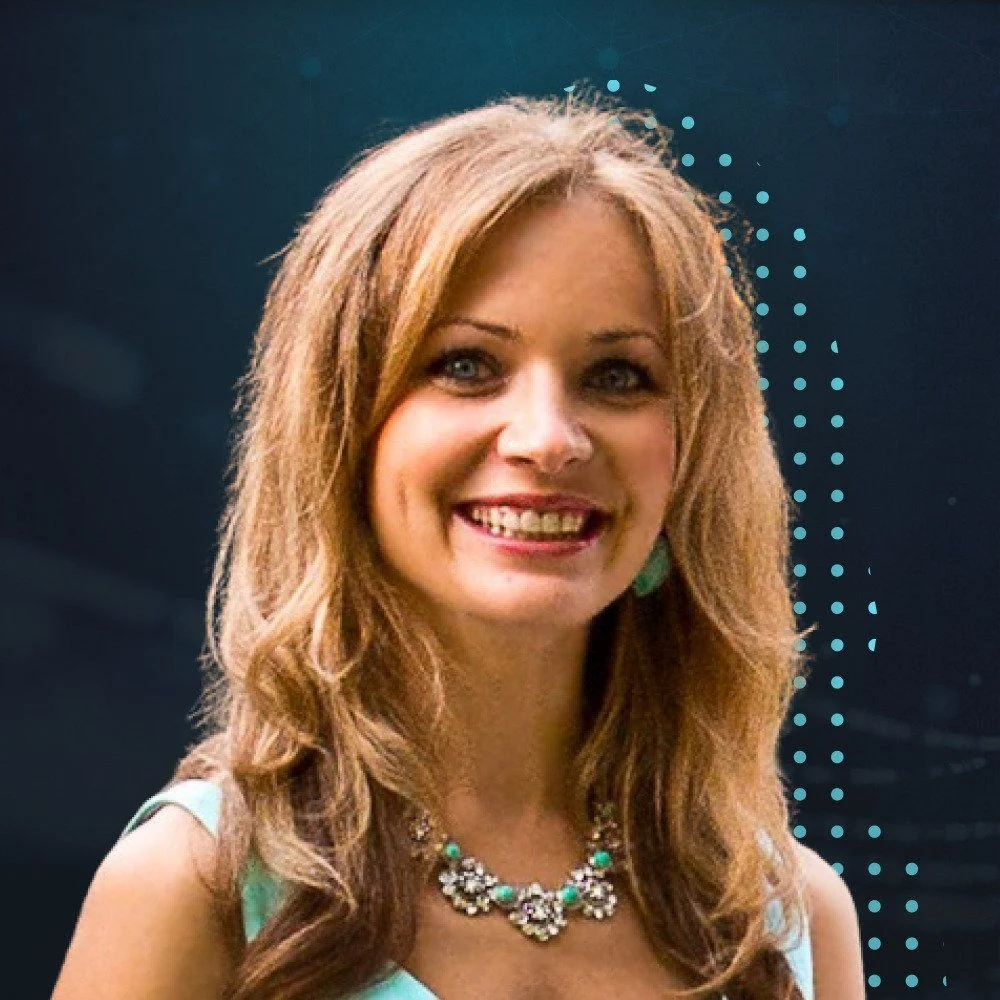
Yuliya Sychikova
Yuliya SychikovaCOO & Co‑founder
Book a meeting30-minute call
Or leave a request
We’ll use your email to reply. Privacy policy