
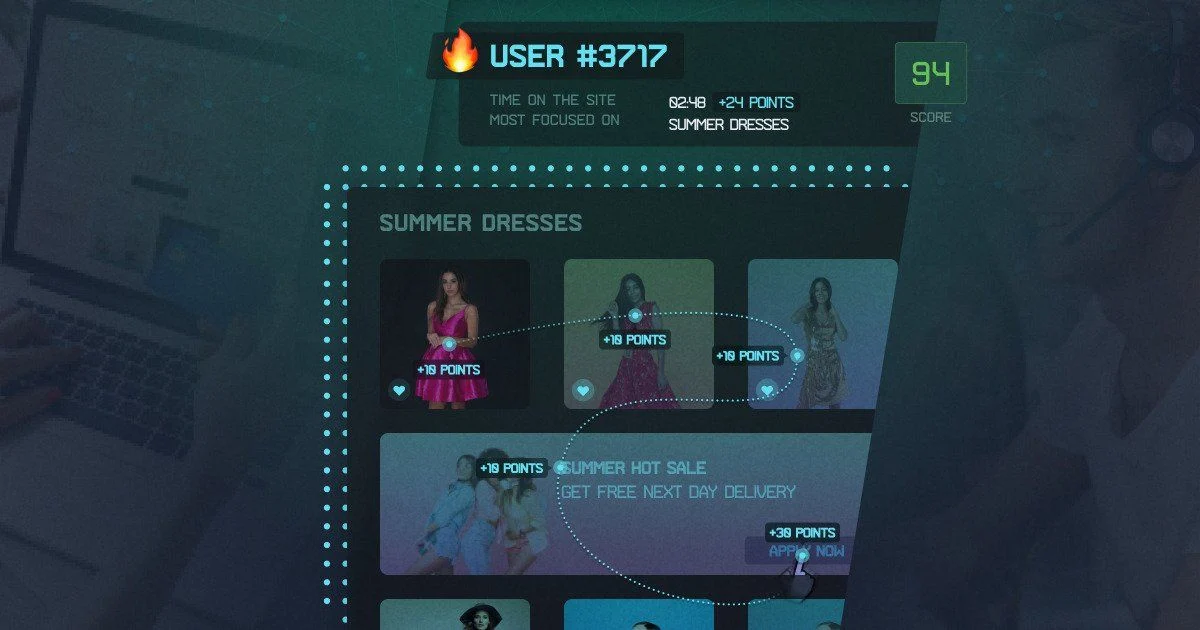
Purchase-intent scoring
Summary
Predictive models for a CPA network’s sales workflow.
The business needed to distinguish buying intent from low-value traffic and prioritise follow-up effort.
A behavioural-data pipeline and predictive model that use interaction patterns to score purchase intent and prioritise a call queue.
Tech Stack
- Firebase
- OpenAI Gym
- Python
- TensorFlow
Project workstreams
- 01
2 Weeks
Data Labelling and Processing
Data Engineer - 02
1 Week
Solution Architecture Design
Solution Architect - 03
2 Weeks
Hypothesis Generation & Validation
Deep Learning Researcher - 04
1 Week
Architecture Modelling
Deep Learning Researcher - 05
3 Weeks
Feature Engineering
Deep Learning Engineer,Deep Learning Researcher - 06
2 Weeks
Data Streaming Pipeline Development
Data Engineer - 07
6 Weeks
Training & Tuning Cycle
Deep Learning Researcher - 08
2 Weeks
Integration & Deployment
Backend Developer,Dev Ops
Tech Challenge
- By using deep learning, our team first aimed to understand customer behavior and then model the probability of purchase based on user’s web-surfing experience.
- Those recommendations had to be revenue driven, maximizing profits of the service, while providing high quality services to a customer.
- Integration of our Apache Spark + Tensorflow architecture with clients Elastic + PostgreSQL + RabbitMQ.
Solution
- We’ve developed a detailed events tracking plan of customers activity and then tested the implementation against the historical data.
- The above helped to measure the most important behavioral patterns, correlating with customers purchase activity.
- Deep learning technologies helped us find the unintuitive correlations between users activity and purchasing outcomes, which are hard to find and interpret.
Impact
A predictive scoring workflow connected to sales follow-up prioritisation.
Published