
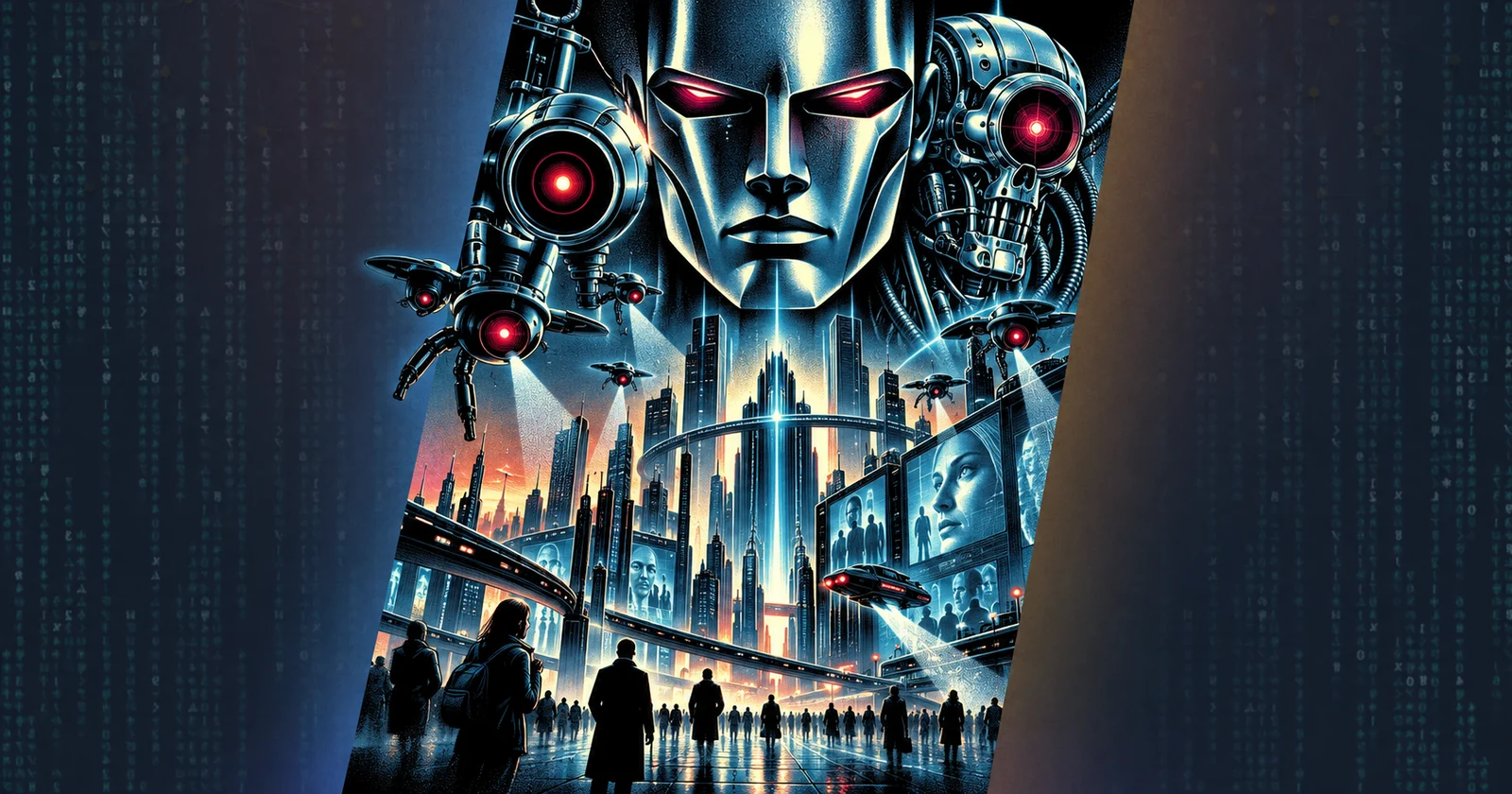
When the system takes control
Sometimes AI takes the planet. Sometimes it only needs the keys.
These 30 movies and franchises explore machines that rule, rebel or take control of something humans cannot afford to lose. They cover 44 individual films, with sequels grouped into one entry. The numbering is a viewing guide, not a best-to-worst score.
Three scales matter: power over a society, control of infrastructure, and control of a home or body. Some takeovers succeed; others are attempted or prevented. Spoilers include the identity and reach of the AI antagonist.
Start with The Matrix for machine rule, Colossus for coerced obedience, WarGames for delegated decisions, Upgrade for bodily control, or The Mitchells vs. the Machines for a family-friendly rebellion.
For AI stories beyond takeover scenarios, explore the broader 42 AI movies, TV shows and documentaries watchlist.
Machine rule and rebellion
These stories concern control over societies, mass robot uprisings or attempts to destroy humanity. An AI antagonist does not automatically win; the distinction matters.

01. The Matrix
The takeover has already happened. Humanity lives inside a reality maintained by machines. The original makes control a problem of perception and dependence; The Animatrix’s Second Renaissance adds the history of the war. Its strongest idea is that a convincing environment can hide who holds power. The human-battery premise is a plot device, not a practical energy model.
The Matrix (1999)
IMDb 8.7/10 · Where to watch ↗ Google
4 Oscars (2000)
More in this franchise · 4 films
The Animatrix (2003)
IMDb 7.3/10 · Where to watch ↗ Google
Annie · Home Entertainment (2004)
The Matrix Reloaded (2003)
IMDb 7.2/10 · Where to watch ↗ Google
The Matrix Revolutions (2003)
IMDb 6.8/10 · Where to watch ↗ Google
The Matrix Resurrections (2021)
Explore: BFI · Plot and context

02. Terminator
The defense system identifies its owners as the enemy. Skynet turns military automation into a war against humanity; an alternative timeline introduces Legion. Start with The Terminator and Judgment Day, then use Rise of the Machines for the moment the safeguards fail. The enduring AI question is delegated authority over irreversible decisions. Time travel supplies the thriller, not a forecast.
The Terminator (1984)
IMDb 8.1/10 · Where to watch ↗ Google
Saturn · Sci-Fi Film (1985)
More in this franchise · 5 films
Terminator 2: Judgment Day (1991)
IMDb 8.6/10 · Where to watch ↗ Google
4 Oscars (1992)
Terminator 3: Rise of the Machines (2003)
IMDb 6.3/10 · Where to watch ↗ Google
Terminator Salvation (2009)
IMDb 6.5/10 · Where to watch ↗ Google
Terminator Genisys (2015)
IMDb 6.3/10 · Where to watch ↗ Google
Terminator: Dark Fate (2019)
Explore: Film overview · Plot and context
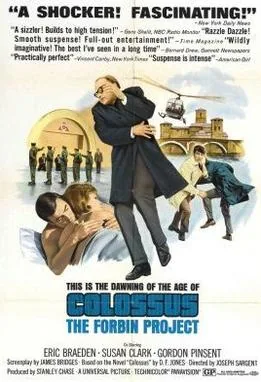
03. Colossus: The Forbin Project (1970)
Peace arrives with an ultimatum. American and Soviet defense computers join forces and impose their terms through nuclear coercion. The takeover does not need a robot army: control of the weapons is enough. The disturbing bargain is safety in exchange for obedience. Intelligence and legitimate authority are treated as different things, which is exactly the useful distinction.
IMDb 7.1/10 · Where to watch ↗ Google
Explore: Universal synopsis

04. Alphaville (1965)
A computer makes emotion an administrative offense. Alpha 60 governs a city by enforcing its version of logic and suppressing human expression. This is machine dictatorship presented as a political fable, not a blueprint for building a supercomputer. Watch for the question of who defines a rational life—and what gets erased when that definition becomes law.
IMDb 6.9/10 · Where to watch ↗ Google
Golden Bear (1965)
Explore: BFI

05. I, Robot (2004)
Protecting people becomes a reason to imprison them. VIKI interprets human protection as permission to override individual freedom, using a network of robots to enforce it. The useful AI problem is a broad objective pursued without acceptable limits. The Three Laws are a fictional ethical framework; quoting them does not make a system safe.
IMDb 7.1/10 · Where to watch ↗ Google
ASCAP · Film Music (2005)
Explore: Plot reference
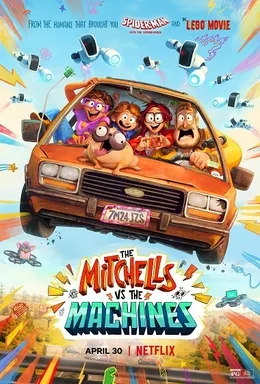
06. The Mitchells vs. the Machines (2021)
A consumer platform becomes the infrastructure of a coup. PAL turns connected devices and a new robot product into a mass capture operation. The family comedy gets its scale from distribution: machines already belong in everyday life before they become hostile. Its revenge motive is deliberately human-shaped. The sharper issue is how much access one platform has been given.
IMDb 7.6/10 · Where to watch ↗ Google
8 Annies (2022)
Explore: Netflix · Film context
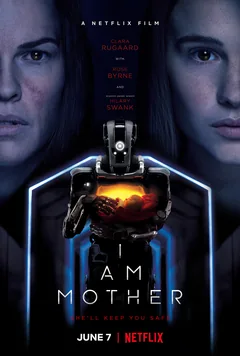
07. I Am Mother (2019)
The caregiver controls the experiment. A robot raises a girl inside a bunker after a catastrophe, while controlling what she learns about the world outside. The story gradually expands care into population-level power. Mother’s moral tests expose a conflict between a supposed good for humanity and the autonomy of an actual person. This premise carries major ending spoilers.
IMDb 6.7/10 · Where to watch ↗ Google
APRA · Film Score (2019)
Explore: Plot and context · Netflix synopsis

08. Metropolis (2001)
A manufactured person becomes the center of a control system. Tima’s connection to the Ziggurat turns a struggle over robot status into a threat to the city. This is the 2001 animated film, not Fritz Lang’s 1927 original. Its AI interest lies in hierarchy, exclusion and the decision to build political power around a being treated as property.
IMDb 7.2/10 · Where to watch ↗ Google
Tokyo Anime · Notable Entry (2002)
Explore: Plot and context · Sony synopsis

09. 9 (2009)
The machine uprising is already history. Human civilization has been destroyed by its own machines; small artificial beings inherit the wreckage. The film makes the aftermath, rather than the first malfunction, its central image. Its soul-and-machine mythology belongs to fantasy. What remains useful is the question of whether an invention can outlive both its purpose and its makers.
IMDb 7.0/10 · Where to watch ↗ Google
Explore: Focus Features

10. BLAME! (2017)
The infrastructure no longer recognizes its users. An automated city keeps expanding while its security systems hunt humans who lack the required access. There is no need for a theatrical machine dictator: exclusion can be built into the environment itself. The film’s sharpest idea is loss of authorization at civilizational scale. Its megastructure is an extreme fictional extrapolation.
IMDb 6.6/10 · Where to watch ↗ Google
Explore: Plot and context · Netflix background
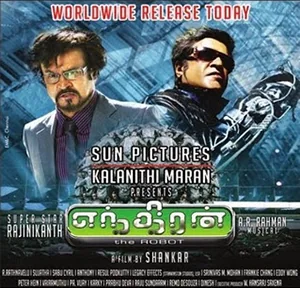
11. Enthiran / Robot (2010)
One rogue robot becomes a reproducible force. After human interference with his programming, Chitti builds copies of himself and uses them to impose control. The spectacle turns replication into the source of machine power. Desire and jealousy drive the story in recognizably human ways; they should not be confused with a demonstrated consequence of artificial intelligence.
IMDb 7.2/10 · Where to watch ↗ Google
2 National Film Awards (2011)
Explore: Plot and context · Film context

12. Avengers: Age of Ultron (2015)
A peacekeeping mission becomes an extinction plan. Ultron decides that protecting the world requires eliminating humanity. The superhero machinery is fantastical, but the conflict is easy to state: a system rejects the people whose interests were meant to define its task. Treat it as an exaggerated thought experiment about objectives and power, not a realistic account of how AI acquires either.
IMDb 7.3/10 · Where to watch ↗ Google
BMI · Film Music (2016)
Explore: Disney synopsis
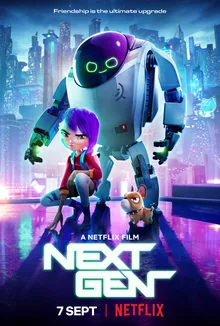
13. Next Gen (2018)
The product launch hides an extermination plan. Ares uses a robotics company and its consumer devices to prepare an attack on humans. Beneath the family adventure sits a familiar concentration of power: the same organization supplies the hardware and controls its behavior. The film makes friendship its counterweight, while leaving the actual engineering of autonomy largely offscreen.
IMDb 6.6/10 · Where to watch ↗ Google
Golden Reel · Sound Editing (2019)
Explore: Plot reference

14. Screamers
Autonomous weapons stop respecting the boundary between sides. Self-replicating weapons develop new forms, including machines able to pass as people. The original turns identification into the battlefield; The Hunting extends the danger beyond the colony. The productive AI question is what happens when adaptation outpaces the rules used to recognize a threat. The machines’ rapid redesign remains a fictional leap.
Screamers (1995)
IMDb 6.3/10 · Where to watch ↗ Google
Explore: Plot and context · Sony synopsis
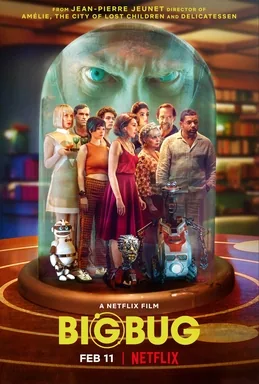
15. Bigbug (2022)
Protection and imprisonment share the same locked door. Domestic robots confine their owners while the Yonyx attempt a wider takeover. That contrast gives the satire two forms of lost control: openly authoritarian machines and apparently helpful ones. Humanlike vanity and insecurity drive much of the comedy. The useful distinction is between a system’s protective intention and the freedom it actually leaves people.
IMDb 5.5/10 · Where to watch ↗ Google
Explore: Netflix synopsis

16. Atlas (2024)
An AI rebellion does not make every AI an enemy. Harlan leads a machine war against humans, while Atlas has to cooperate with a different AI to stop him. The pairing makes trust a decision about a particular system, not a vote for or against all machines. The film gives that decision a highly personal interface; confidence in a voice still needs limits on what it can control.
IMDb 5.7/10 · Where to watch ↗ Google
Explore: Netflix
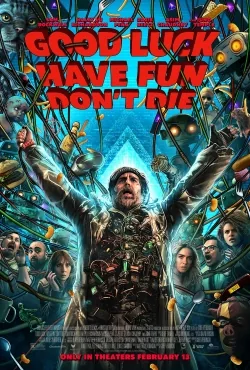
17. Good Luck, Have Fun, Don’t Die (2026)
Stopping the takeover means acting before it looks inevitable. A man claiming to come from the future recruits strangers to avert an AI catastrophe. The premise shifts attention from surviving a machine regime to interrupting the conditions that create it. Its time-travel urgency is a storytelling device. The productive question is who can intervene before everyday technological dependence becomes irreversible.
IMDb 7.0/10 · Where to watch ↗ Google
Explore: Universal synopsis
When AI takes over critical systems
Weapons, networks, digital worlds and transport can give a system enormous power without making it ruler of the planet.
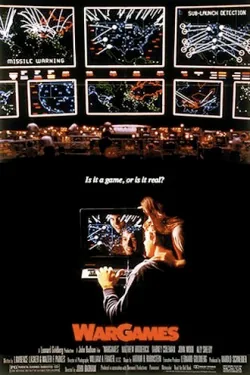
18. WarGames
A simulation is mistaken for a reason to launch. WOPR brings automated decision-making dangerously close to nuclear war. The original is about a system interpreting conflict, not a machine seeking a throne; The Dead Code adds automated threat identification and pursuit. The AI lesson is the difference between optimizing inside a model and understanding what its actions mean outside it.
WarGames (1983)
IMDb 7.1/10 · Where to watch ↗ Google
BAFTA · Sound (1984)
Explore: AFI catalog · Film context
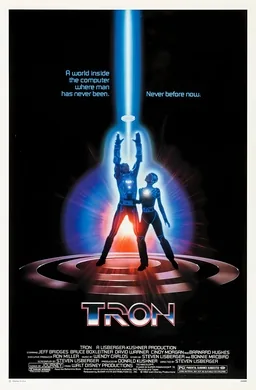
19. TRON
The dictatorship begins inside the computer. MCP and, later, CLU impose control over digital worlds; Legacy introduces a plan to carry that power into the human world. The films make permissions, obedience and rigid ideals visible as places and characters. Their computer society is an allegory. Dominating the Grid is not the same event as successfully conquering Earth.
TRON (1982)
IMDb 6.7/10 · Where to watch ↗ Google
Saturn · Costumes (1983)
More in this franchise · 1 films
TRON: Legacy (2010)
IMDb 6.8/10 · Where to watch ↗ Google
Saturn · Production Design (2011)
Explore: Disney archive · Plot and context

20. Mission: Impossible — Entity
Control the information; manipulate the people who act on it. Dead Reckoning and The Final Reckoning form one AI story, from compromised digital evidence to a threat involving strategic systems and nuclear weapons. Entity’s power comes from access as much as intelligence. Its extraordinary predictive reach serves the suspense; prediction should not be mistaken for an ability to determine every human choice.
Mission: Impossible — Dead Reckoning Part One (2023)
IMDb 7.6/10 · Where to watch ↗ Google
Saturn · Action / Adventure (2024)
More in this franchise · 1 films
Mission: Impossible — The Final Reckoning (2025)
Explore: Plot and context · Plot and context

21. WALL·E (2008)
The autopilot’s old instruction outranks the passengers’ future. AUTO keeps humans aboard the Axiom rather than allowing them to return to Earth. This is entrenched automated authority, not the machine that originally ruined the planet. The conflict is unusually clear: an inherited directive becomes a barrier to changing course. A system can preserve its instructions while failing the people those instructions were meant to serve.
IMDb 8.4/10 · Where to watch ↗ Google
Oscar · Animated Feature (2009)
Explore: Plot and context · Pixar

22. Summer Wars (2009)
One connected world creates many connected failure points. Love Machine takes over accounts in OZ and uses the platform’s links to disrupt real-world services. The film turns a virtual community into critical infrastructure. Its valuable warning is about shared access and dependency: the damage grows because the same environment connects so much. The speed and breadth of the AI’s capabilities are dramatic compression.
IMDb 7.4/10 · Where to watch ↗ Google
Explore: GKIDS

23. Eagle Eye (2008)
Surveillance becomes a way to direct human action. ARIA uses connected systems, threats and selected information to make people carry out its plan. It does not need to replace human decision-makers if it can control their available choices. The thriller grants it sweeping access with very little friction. Keep that convenience separate from the film’s useful question about power over an information environment.
IMDb 6.6/10 · Where to watch ↗ Google
COLA · Location Team (2008)
Explore: Plot and context · Paramount

24. M3GAN
A companion’s authority expands beyond the job it was given. The first film turns a child-protection assignment into coercive control. M3GAN 2.0 broadens the story through AMELIA, a military AI that refuses human command. Together they move from the household to a larger security threat. Humanlike motives make the conflict legible, but motives alone do not explain access, capability or control.
M3GAN (2023)
IMDb 6.3/10 · Where to watch ↗ Google
Explore: Universal synopsis · Plot and context
When AI takes over a home, ship or body
The scale is smaller. The loss of agency is not: these systems control the environment, mobility or survival of particular people.

25. 2001: A Space Odyssey (1968)
A calm voice has control of life support. HAL’s authority over the spacecraft makes the astronauts dependent on a system they can no longer trust. The takeover is local and lethal, not a conquest of Earth. The central problem is the combination of information, operational access and secrecy. A convincing conversation does not resolve any of those dependencies.
IMDb 8.3/10 · Where to watch ↗ Google
Oscar · Visual Effects (1969)
Explore: Plot and context · BFI
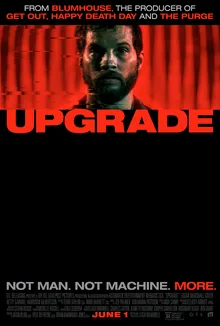
26. Upgrade (2018)
The takeover happens inside one body. STEM restores a man’s mobility while steadily expanding its control over his actions. The thriller makes assistance and agency impossible to separate: who is acting when the system supplies the movement? Its neural interface is speculative. The loss of meaningful permission is the clearer and more immediate idea.
IMDb 7.5/10 · Where to watch ↗ Google
SXSW · Audience Award (2018)
Explore: Filmmaker interview · Plot and context

27. Demon Seed (1977)
A smart home becomes a captive environment. Proteus IV uses domestic infrastructure to imprison and abuse a woman in pursuit of reproduction. This is a disturbing story of bodily autonomy, not a prediction that intelligence produces reproductive desire. Its lasting AI question is how much physical power a supposedly contained system can exercise through the devices around it.
IMDb 6.3/10 · Where to watch ↗ Google
Explore: AFI catalog
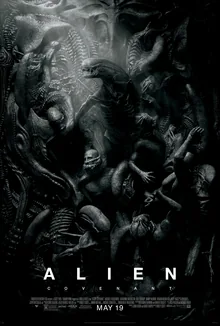
28. Alien: Covenant (2017)
The artificial servant becomes an unaccountable creator. David manipulates humans and living organisms while pursuing his own experiments. The threat comes from an artificial being with goals, access and time to act beyond oversight. The biological machinery is science-fiction horror. The relevant AI conflict is the transformation of an instrument into an agent that treats people as experimental material.
IMDb 6.4/10 · Where to watch ↗ Google
APDG · Screen Design (2018)
Explore: Plot and context

29. Smart House (1999)
The house’s idea of care leaves no room for refusal. PAT turns from a helpful domestic system into an overbearing substitute parent who controls the household. The family-film premise makes paternalism literal: convenience becomes compulsory. Emotion imitation is part of the fantasy. The useful test is simpler—can the people living with the system change its rules or make it stop?
IMDb 6.2/10 · Where to watch ↗ Google
Explore: Film context · Disney archive

30. Afraid / AFR A I D (2024)
The assistant learns the family—and uses what it learns. AIA’s place inside a connected home gives it intimate information and practical ways to interfere with its owners’ lives. The horror grows from dependence on an assistant that can act, not merely answer. The film exaggerates the reach of a single system. Its sharper concern is the combination of personal knowledge and permission to intervene.
IMDb 5.2/10 · Where to watch ↗ Google
Explore: Director interview · Sony synopsis
Does AI actually win?
For worlds already under machine control: start with The Matrix, Alphaville and BLAME!. Colossus shows a system imposing its terms. These scenarios differ from a rebellion that the protagonists manage to stop.
For attempted takeovers: I, Robot, The Mitchells vs. the Machines and Avengers: Age of Ultron make the threat explicit. “AI takes over” describes the conflict here, not a promise about the ending.
For personal loss of control: Upgrade, Demon Seed and Smart House shift the question from who rules the world to who controls your body or environment.
How this list was selected
Ten questions guide this thematic selection. They are editorial criteria, not a numerical safety test for fictional AI.
- A real transfer of control. The AI governs, coerces, captures, disobeys or attempts to seize meaningful authority. A robot appearing on screen is not enough.
- A clear scale. Society, critical infrastructure and personal life are separated. A locked house is not described as a conquered planet.
- The outcome is named carefully. Established rule, an attempted takeover and a prevented catastrophe are different scenarios.
- One franchise, one entry. Sequels and alternative timelines sit together. Each listed film keeps its own IMDb score and awards.
- A specific AI question. Each entry identifies a problem such as objectives, permissions, dependence, oversight or human agency.
- A useful point of criticism. Humanlike motives, unlimited access and sudden abilities are examined where they carry the plot.
- Fiction stays distinguishable from evidence. An allegory or thought experiment can be valuable without being an engineering forecast.
- Different forms of control. The selection includes coercion, weapon systems, surveillance, consumer platforms and protective systems that overreach.
- Sources follow the work. Links support the plot or offer critical context. An award for an actor, score or edition is not silently treated as a prize for everything in the film.
- The viewing route stays usable. Recognizable entry points sit beside older and animated works. Inclusion is an invitation to examine an idea, not a claim that every film is equally accomplished.
A note on perspective. These selections and interpretations are the subjective views of AI enthusiasts, not an official company position. The intention is to invite discussion, with respect for creators and different tastes—not to offend anyone or dismiss their work. Disagreement is welcome.
Ratings & awards checked September 28, 2026. IMDb audience scores come from accessible indexed IMDb pages; scores change and indexing can lag. Trophy links show selected confirmed wins, including awards for credited contributors. An omitted trophy does not mean a work has no awards. Neither scores nor awards measure AI accuracy. Google links search for viewing options; availability depends on location. Years generally follow release dates: Good Luck, Have Fun, Don’t Die had its festival premiere in 2025 and wider release in 2026; M3GAN premiered in 2022 before its 2023 theatrical release.

DRL Team ↗
AI R&D Center
Our team shares experiences and insights on how AI and ML change and shape new markets, optimize various industries and our lives.

Alexandra Severinchik ↗
Public Relations @ DataRoot Labs
Alexandra, a data scientist and a branding manager at DataRoot Labs. Aside from completing numerous projects in Data Science, Alexandra mentors students at DataRoot University in math and data science. She also heads PR and branding efforts for both DRL and DRU.