

What Is AI in Fleet Management?
AI in fleet management refers to the use of artificial intelligence, including machine learning, computer vision, and predictive analytics, to automate, optimize, and monitor fleet operations. These systems process real-time data from telematics, GPS, vehicle sensors, and driver behavior to make continuous decisions about routing, maintenance, safety, and fuel efficiency. Unlike traditional GPS tracking, AI fleet platforms learn from historical and live data to predict problems before they occur and adapt operations as conditions change.
Fleet management transitioned from using GPS for tracking and manually planning to artificial intelligence directing all vehicles, routes, and driver workloads in one overall optimized way over the past decade. Traditional methods, such as paper logs and Excel spreadsheets, and not combining all telematics data, do not address the challenges posed by modern logistics, which are characterized by fluctuating fuel prices, the need for constant adjustment of drivers' schedules, and customers' demand for on-time delivery.
AI can now provide intelligence for fleet management by using data it collects to predict and take action on behalf of fleet managers across all operations, including cost, safety, sustainability, and reliability. In this article, we examine how AI is transforming fleet operations and profile the companies leading the way in this domain.
Why Traditional Fleet Systems Fall Short
Before the use of AI, fleet managers faced several obstacles:
- Data for all vehicles was separate and siloed from other vehicle sensors, driver logs, traffic information, and customer orders.
- Route planning was done manually and could only be done based on a static model. Routes were not adjusted if there were changes in road conditions or if jobs were added or subtracted during the day.
- Maintenance was performed reactively, resulting in unexpected breakdowns and downtime.
- Fleet Managers had very little visibility regarding the safety and behaviour risk of drivers.
With AI, every data source related to a vehicle is connected and extracted into one cohesive decision-making system that is always learning and adapting to the changing environment. For example, during a shift, a fleet manager will be able to reassign jobs to drivers based on the current traffic conditions, changes to a driver’s route, and the number of jobs that need to be completed by each driver.
Core Use Cases of AI in Intelligent Fleets
1. Predictive Maintenance
AI utilizes sensor patterns to forecast when machinery will fail instead of relying on scheduled service intervals; this helps to minimize failures and unplanned outages within the facility. Due to its use of AI models, a leading logistics provider was able to decrease vehicle downtime related to maintenance by 30% and save hundreds of thousands of dollars on maintenance costs.
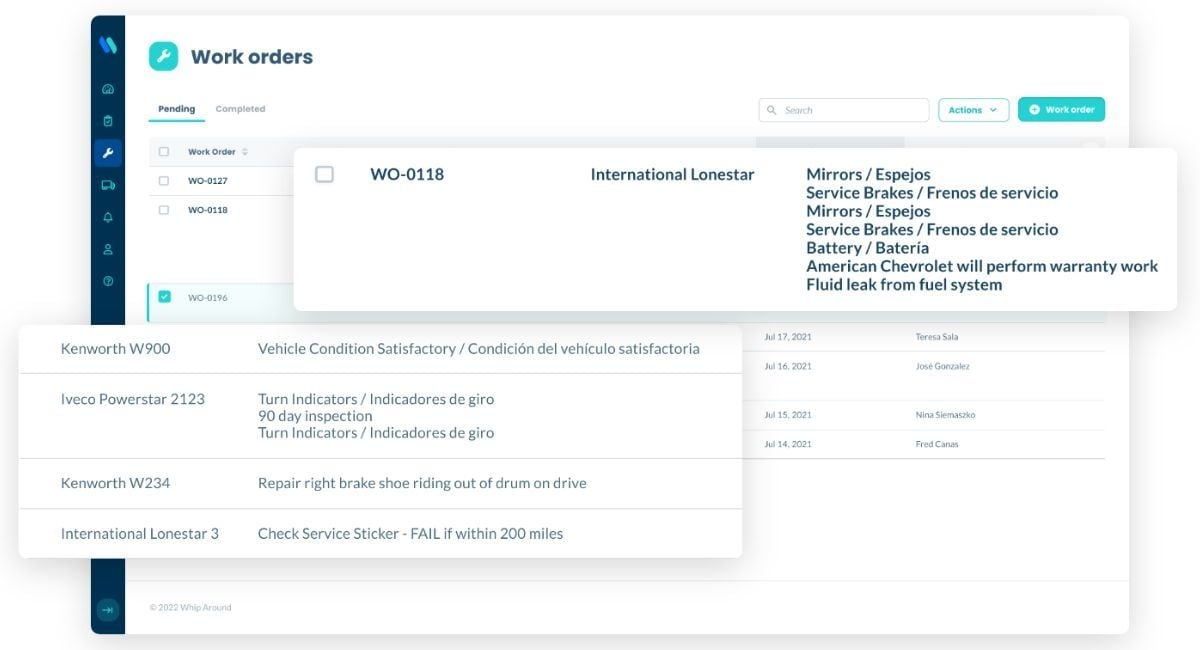
Whip Around (USA / $19.3M total funding)
Platform: Cloud and mobile-based fleet maintenance software connecting drivers, mechanics, and fleet managers. Features include mobile DVIRs (Driver Vehicle Inspection Reports), work-order management, defect tracking, inventory control, automated compliance alerts, and integrations with telematics and fuel-card providers.
Role in FM: Replaces paper-based inspection and maintenance workflows with a digital, mobile-first system. Fleet managers gain real-time visibility into vehicle health, defect status, and DOT/FMCSA compliance, enabling proactive scheduling rather than reactive emergency repairs.
How They Use AI: AI predicts upcoming maintenance needs based on distance, hours in service, and time intervals, automatically triggering alerts and work orders before issues escalate. The platform is developing AI-agent-driven inspection workflows that will triage defect urgency, propose service windows, and pre-authorize repairs with minimal human intervention.
Stratio (Portugal / $15.4M total funding)
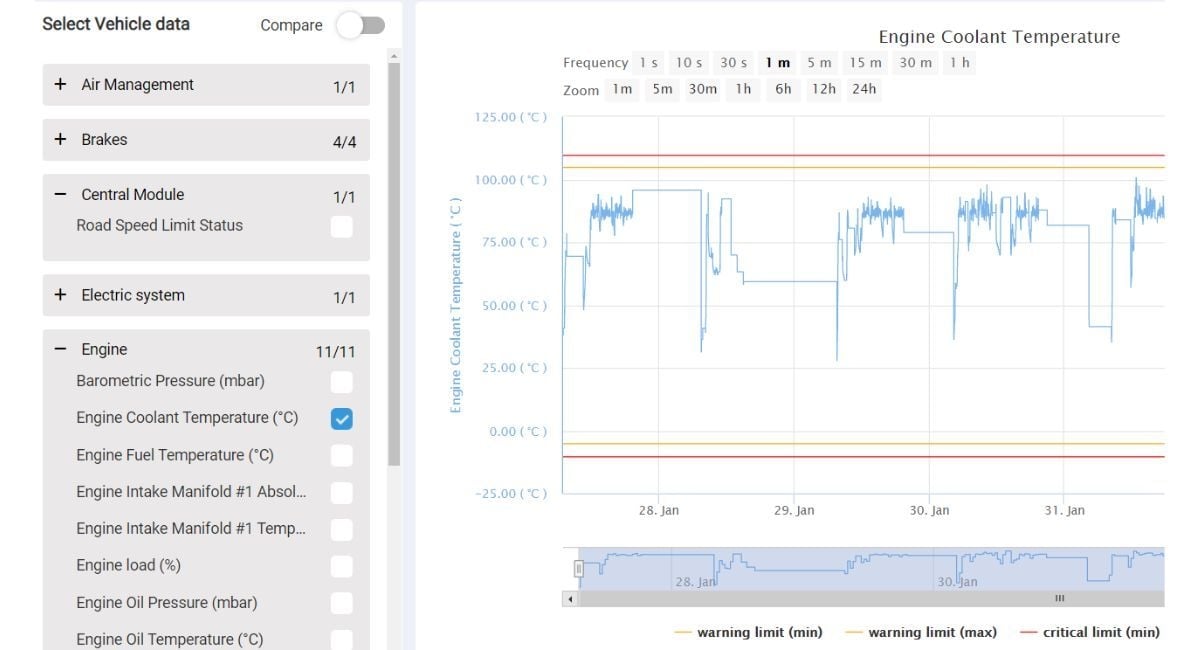
A real-time predictive fleet maintenance SaaS platform for buses, trucks, and electric vehicles. It combines large-scale vehicle data processing with machine-learning fault detection models, remote diagnostics, an intelligent ecodriving module, and traffic-management maps.
Role in FM: Stratio operates as the maintenance intelligence layer for large public-transport and logistics operators. Five of the world's ten largest transport companies rely on it to achieve zero unplanned downtime, extending vehicle life cycles and making EV fleet economics viable.
How They Use AI: Stratio's proprietary AI combines IoT telemetry with machine learning to predict component failures, including EV battery-pack degradation, before they occur. It's fully explainable AI surfaces the exact reason behind each alert, enabling remote pre-diagnosis. A generative-AI layer (in partnership with SBS Transit) allows engineers to interrogate the system in natural language.
Way (Finland / $2.93M total funding)
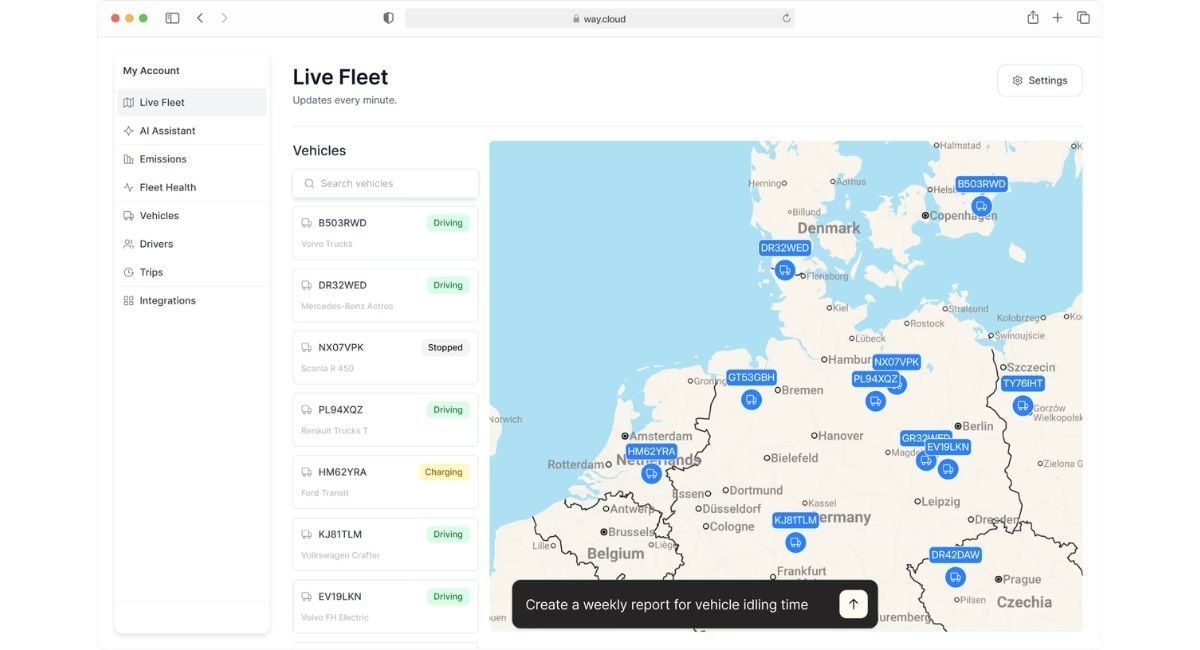
A data infrastructure platform for commercial fleets that unifies multi-source operational data from native vehicle systems and third-party IoT devices into a secure, customer-controlled storage and modelling layer. Designed to require no additional hardware installations across multi-OEM fleets.
Role in FM: Way provides the foundational data infrastructure layer that makes fleet digitization and AI adoption practical – particularly for operators running mixed-OEM fleets where data is fragmented across incompatible systems. It is built for compliance with the EU Data Act and positions customers to integrate predictive analytics and AI tools without rebuilding their data stack.
How They Use AI: Way's intelligence engine applies AI to normalise, unify, and interpret real-time data streams from diverse vehicle and IoT sources, generating predictive maintenance alerts and operational insights. Its many-to-many architecture enables seamless AI-model integration and rapid iteration as fleet capabilities evolve.
Webfleet (Germany / Subsidiary – No Independent Funding)
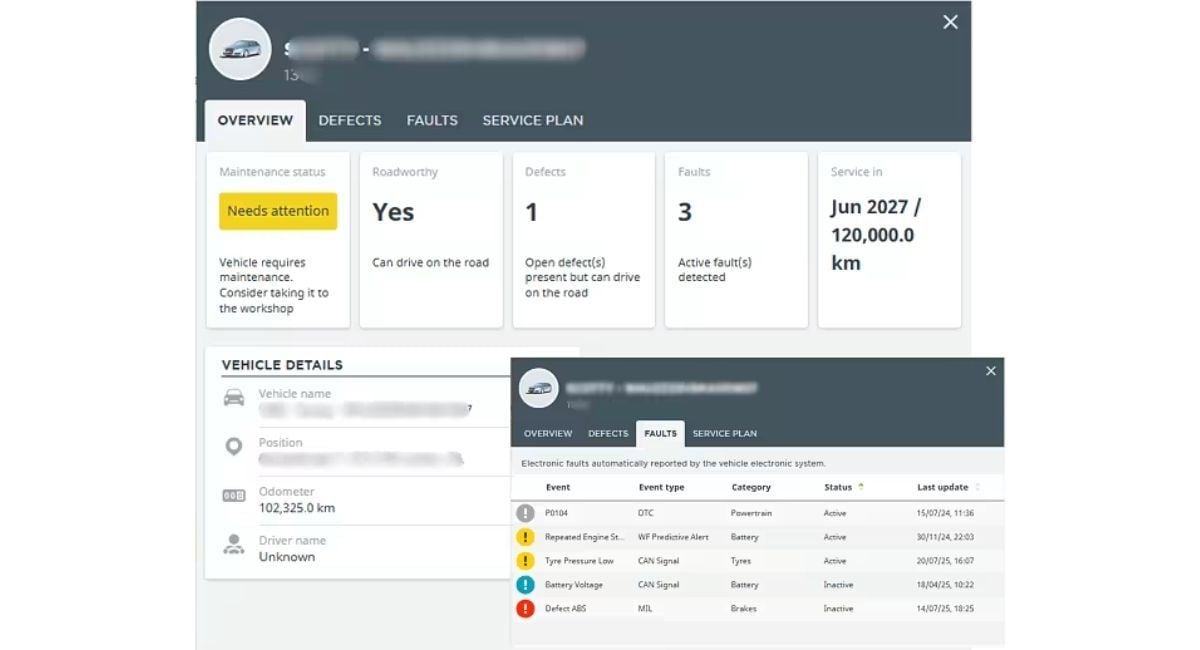
An enterprise-grade fleet management platform used by over 60,000 businesses in 180 countries. Covers telematics, GPS tracking, driver-behaviour analytics (OptiDrive 360), ELD compliance, EV-fleet tools, AI-powered video telematics (Webfleet Video), and a generative-AI Fleet Advisor for natural-language data queries.
Role in FM: Webfleet serves as an all-in-one operating backbone for SMB and enterprise fleets, delivering data-driven insights across safety, compliance, sustainability, and total cost of ownership. As part of Bridgestone Fleet Care, it integrates tyre-health data with vehicle telematics for end-to-end predictive maintenance.
How They Use AI: Webfleet's AI Assistant (GenAI) allows fleet managers to query live and historical performance data through natural language. Its partnership with Questar brings ML-powered predictive vehicle health management – analysing past performance and current condition to flag breakdowns proactively. Computer-vision AI in Webfleet Video detects distracted driving, tailgating, and fatigue in real time.
2. Dynamic Route Optimization
AI is not simply generating a static route; it constantly updates based on the instance's current traffic, weather, and business activity as it develops. An example of this was the ability of client systems to provide dynamic recalculation of oversized waste deliveries as new jobs were created or removed; they achieved a 40% decrease in the cost of operations by redefining the routes used for oversized vehicle deliveries.
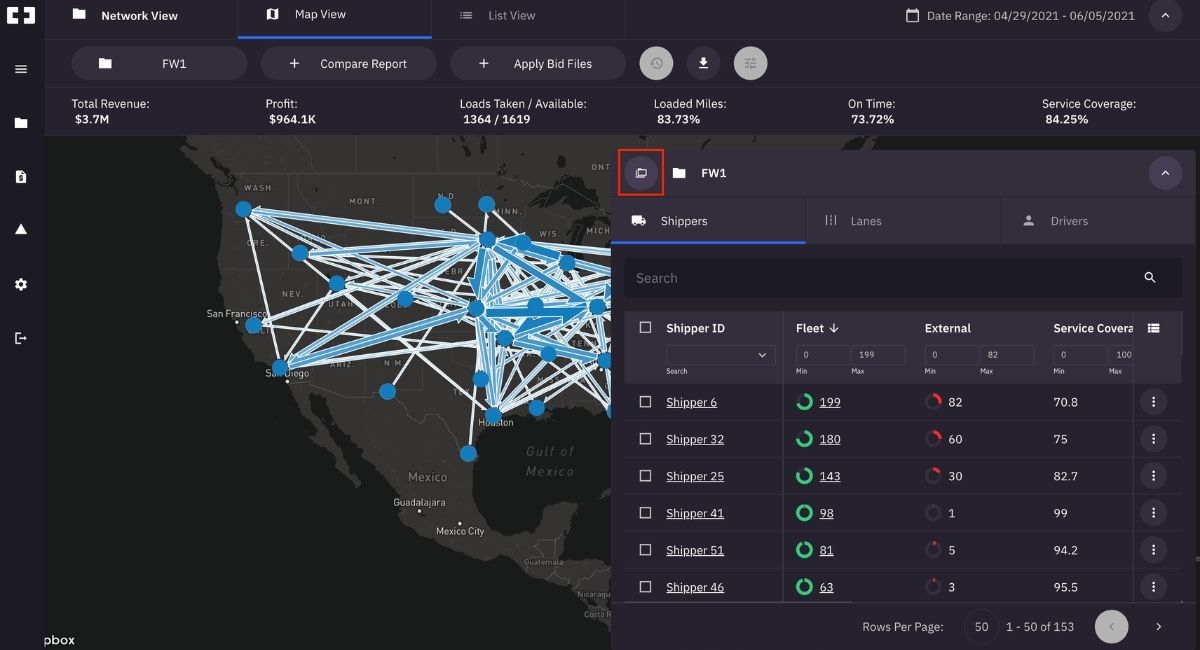
Optimal Dynamics (USA / $95.8M total funding)
A decision-automation platform for truckload carriers and private fleets, spanning strategic network planning, real-time dispatch and load acceptance, bid management, and tactical procurement – all driven by a unified AI engine rooted in nearly 40 years of Princeton University research.
Role in FM: Optimal Dynamics automates the most complex, high-volume decisions in trucking: which loads to accept, how to assign drivers, and how to balance a network weeks in advance. Customers have shifted 80% of fleet managers away from routine planning tasks, handling higher volumes without adding headcount.
How They Use AI: The platform applies high-dimensional reinforcement learning and stochastic optimization (approximate dynamic programming) to model the downstream value of every driver-to-load decision under real-world uncertainty. Unlike deterministic systems, CORE.ai continuously re-optimises across the entire planning horizon, maximising revenue per truck and minimising empty miles in real time.
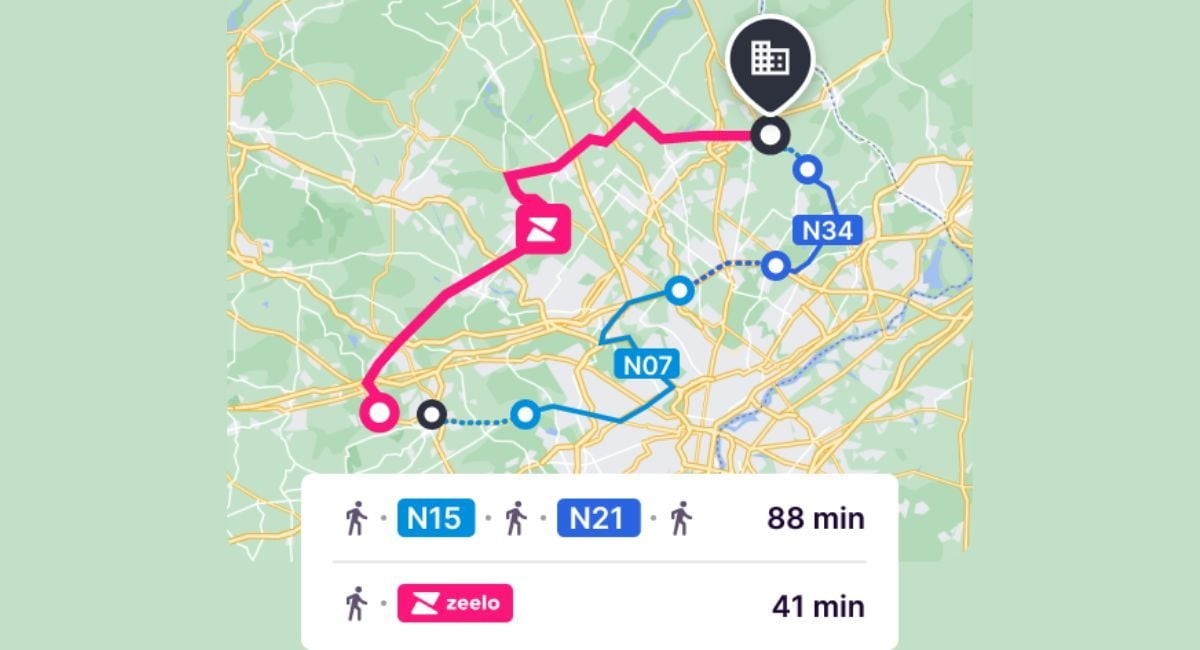
Zeelo (UK / $56.6M total funding)
A fully managed, AI-powered corporate bus platform and Transportation-as-a-Service (TaaS) solution serving 1,000+ corporations and schools across the UK, US, and Ireland. The platform includes a proprietary routing engine (RINA), a live ops and booking system (Mission Control), rider and driver apps, and 24/7 customer support.
Role in FM: Zeelo manages the full lifecycle of commuter and school shuttle programmes – from route design and vehicle procurement to operator management, ridership analytics, and carbon reporting. It delivers 7 million rides annually and is committed to transitioning all services to electric vehicles by 2030.
How They Use AI: Zeelo's RINA (Routing Intelligent Navigation Algorithm) uses anonymised geographic and ridership data to design and continuously optimise routes, dynamically adjusting vehicle sizes, timetables, and stop locations based on actual demand. The system feeds live ridership and operational data back into RINA for ongoing optimisation, enabling customers to reduce transport expenditure by 10–29% while improving ridership.
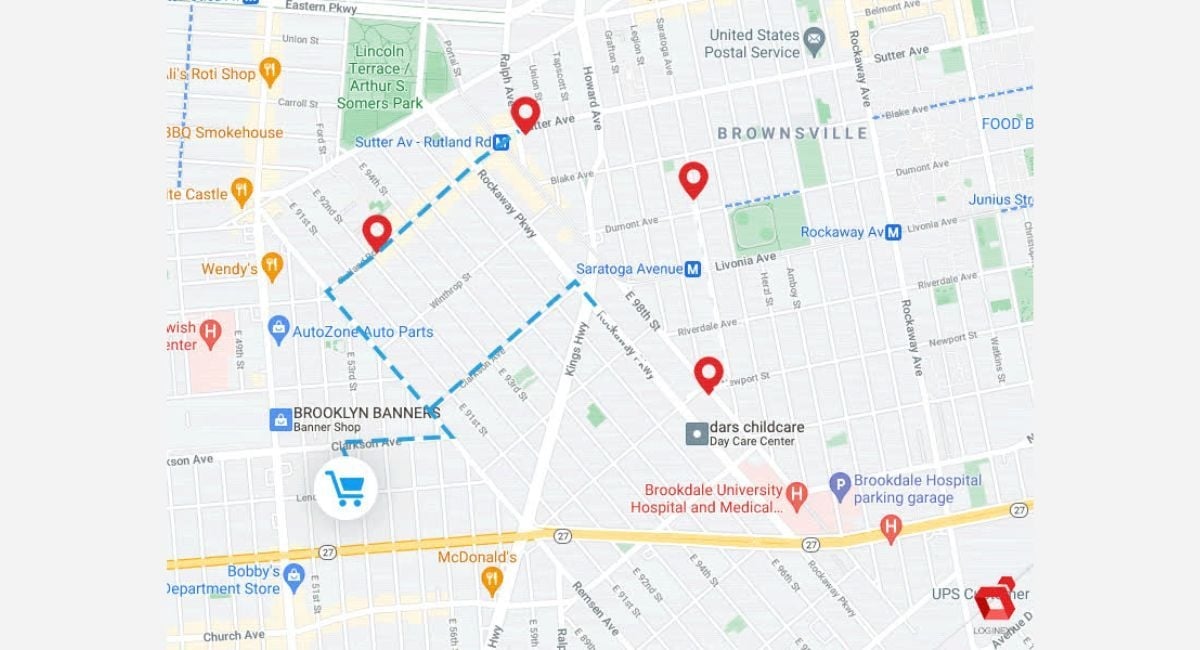
LogiNext (USA / India / $49.6M total funding)
A cloud-based logistics and fleet routing SaaS platform offering AI-powered route optimisation, real-time GPS tracking, automated dispatching, last-mile delivery management, geofencing, and predictive analytics. Serves enterprise clients across retail, food & beverage, courier, healthcare, and field-service sectors globally.
Role in Fleet Management: LogiNext replaces manual dispatching and static route planning with a continuously optimised, data-driven workflow. Fleet managers gain complete visibility across owned vehicles, third-party carriers, and field workers in a single dashboard, enabling faster decision-making and significant cost reduction.
How They Use AI: LogiNext's AI engine analyses millions of potential routes in seconds, accounting for real-time traffic, weather, vehicle capacity, customer time windows, and driver constraints. The system dynamically recalculates routes on the fly as new orders arrive or disruptions occur, delivering reported reductions of up to 25% in delivery times and 20% in fuel costs.
Populus (USA / $19.9M total funding)
An urban mobility fleet management platform designed for cities, transit agencies, and shared-mobility operators (e-scooters, e-bikes, autonomous vehicles). Provides a regulatory data layer and management dashboard enabling public agencies to regulate, monitor, and optimise shared fleets on city streets.
Role in FM: Populus sits at the intersection of municipal regulation and fleet operations, giving both city governments and operators a shared data environment for permit management, geofenced zone compliance, real-time trip tracking, and performance reporting.
How They Use AI: Populus uses AI to analyse mobility data streams from connected devices, identifying high-demand zones, compliance violations, and congestion patterns. Machine-learning models help cities and operators predict where vehicles should be repositioned to meet demand and flag safety or compliance incidents in real time.
3. Driver Behavior, Safety Alerts, and Risk Detection
Fleet safety isn't just about recording incidents; it focuses on preventing these incidents from occurring in the first place. AI-powered fleet safety systems continuously analyze driver behavior through data points such as telematics, GPS, Computer Vision, and Environmental Signals. Based on this data, Fleet Safety theorizes about the possible scenarios that place drivers in dangerous situations and provides instant feedback.
When these systems indicate a potential high-risk case for a driver, AI provides real-time alerts and coaching to allow for immediate corrective action by either the driver or Fleet managers. Over time, these systems create Behavioral Profiles on drivers and Risk Heat Maps for fleets. These profiles and maps can help organizations target specific training opportunities, adjust driving routes, and schedule preventive maintenance across the entire fleet. By moving from a reactive incident reporting model to a proactive risk detection/behavior optimization approach, organizations will greatly decrease the number of accidents, lower their insurance rates, and improve both Fleet Safety and performance.
Motive (USA / $567.3M total funding) An integrated AI platform for physical operations serving nearly 100,000 customers. Combines AI dashcams, GPS vehicle tracking, ELD compliance, driver safety scoring, asset tracking, spend management, and an operations data platform into a single Integrated Operations Platform.
Role in FM: Motive consolidates what were previously fragmented hardware and software solutions into one platform, giving safety, operations, and finance teams a shared view of every driver, vehicle, asset, and expense. Since launching its AI Dashcam, the platform is estimated to have helped prevent over 170,000 accidents and save more than 1,500 lives.
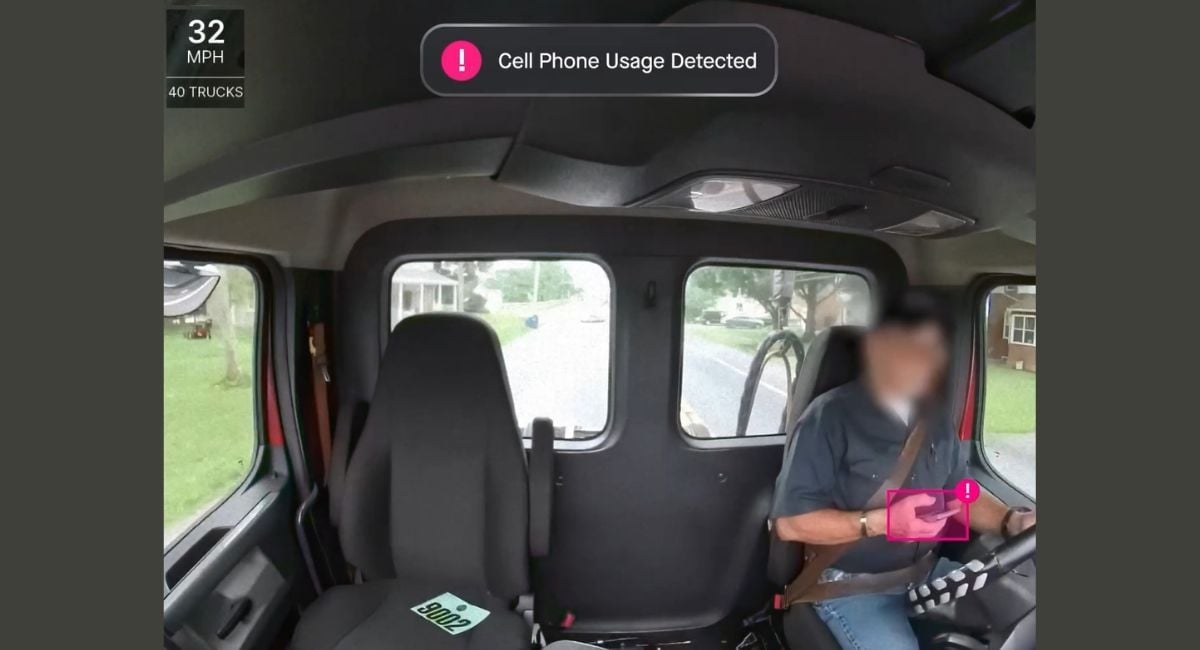
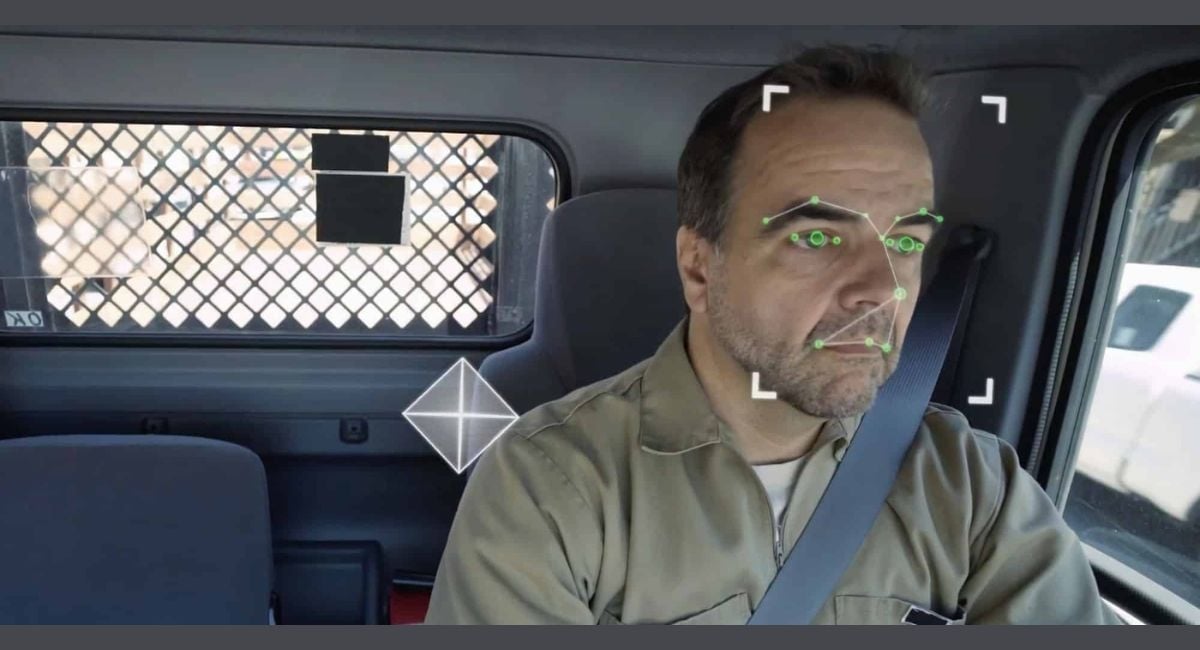
How They Use AI: Motive's AI Dashcam Plus runs more than 30 precision AI models simultaneously on a Qualcomm edge-AI processor, using stereo vision for depth perception. Computer vision detects distracted driving, phone use, tailgating, and lane departure in real time. The DRIVE risk-scoring engine and personalised coaching workflows allow fleet managers to identify and remediate high-risk drivers before incidents occur.
Nauto (USA / $173.9M total funding)
An AI-powered fleet safety and operations platform built around predictive collision prevention. Integrates dual-facing dash cameras, computer vision, multi-sensor fusion, ELD compliance, 360-degree ancillary cameras, and a driver self-coaching app – powered by over 4 billion AI-processed driving miles.
Role in FM: Nauto targets the root cause of fleet accidents – driver distraction and delayed reaction times – by giving drivers and managers predictive, not just reactive, intelligence. Over 1,000 fleets worldwide have adopted the platform, with customers reporting up to 80% collision reduction and significant insurance savings.
How They Use AI: Nauto's Predictive Risk Fusion simultaneously assesses driver behaviour (distraction, drowsiness, phone use) and external risks (pedestrians, intersections, other vehicles) to compute a live collision-risk score. At elevated risk, in-cab alerts give drivers up to 100 extra feet of reaction distance at 60 mph. Only high-risk clips are uploaded to the cloud, feeding the proprietary VERA safety score and manager-led coaching workflows.
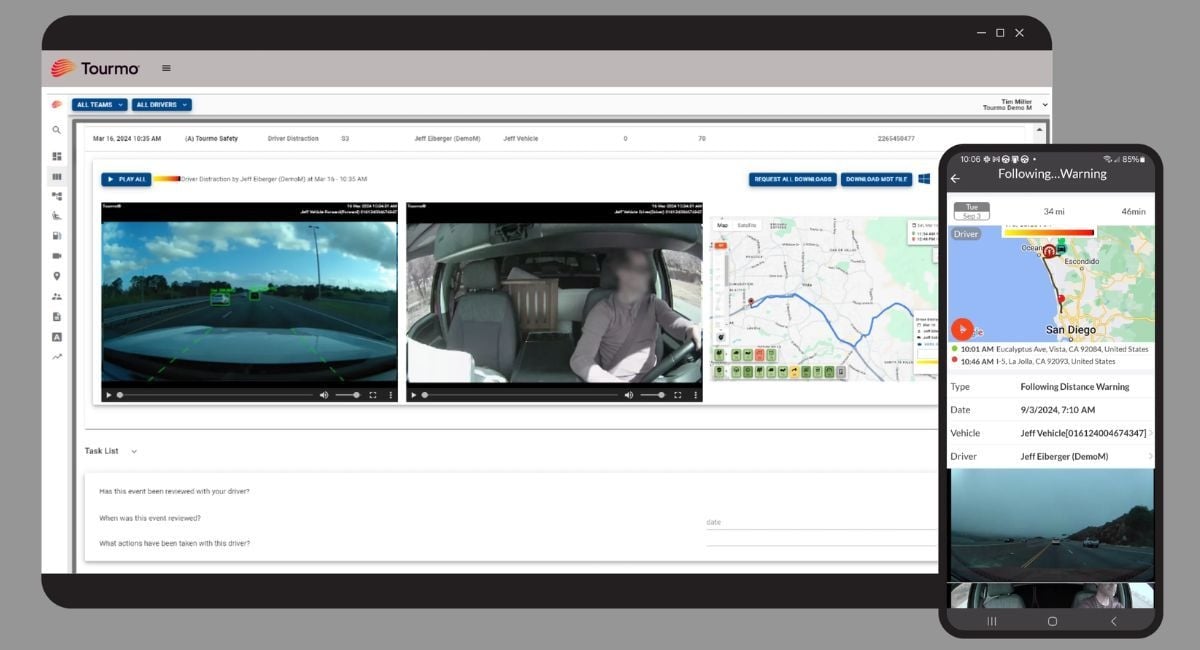
Tourmo (USA / $8M total funding)
A device-agnostic AI fleet management platform with over 600,000 users in 151 countries. Unifies telematics, video, fuel, maintenance, and workforce data from any existing hardware into a single dashboard, adding AI-driven behavioural scoring, automated task workflows, route-deviation alerts, and a natural-language CoPilot.\
Role in FM: Tourmo operates as an AI intelligence layer on top of a fleet's existing technology stack, eliminating costly hardware replacement. It converts fragmented data silos into prioritised, actionable tasks for managers and drivers, improving safety, compliance, fuel efficiency, and operational productivity simultaneously.
How They Use AI: Tourmo's Auto-AI engine normalises raw mobility data from heterogeneous sources, removing false positives before applying ML scoring to driver behaviour. The AutoPilot module turns AI-identified risk events into automated coaching tasks. Real-time plan-vs.-actual analysis flags deviations the moment they occur. Tourmo CoPilot lets managers query any fleet metric in natural language and receive instant visualisations.
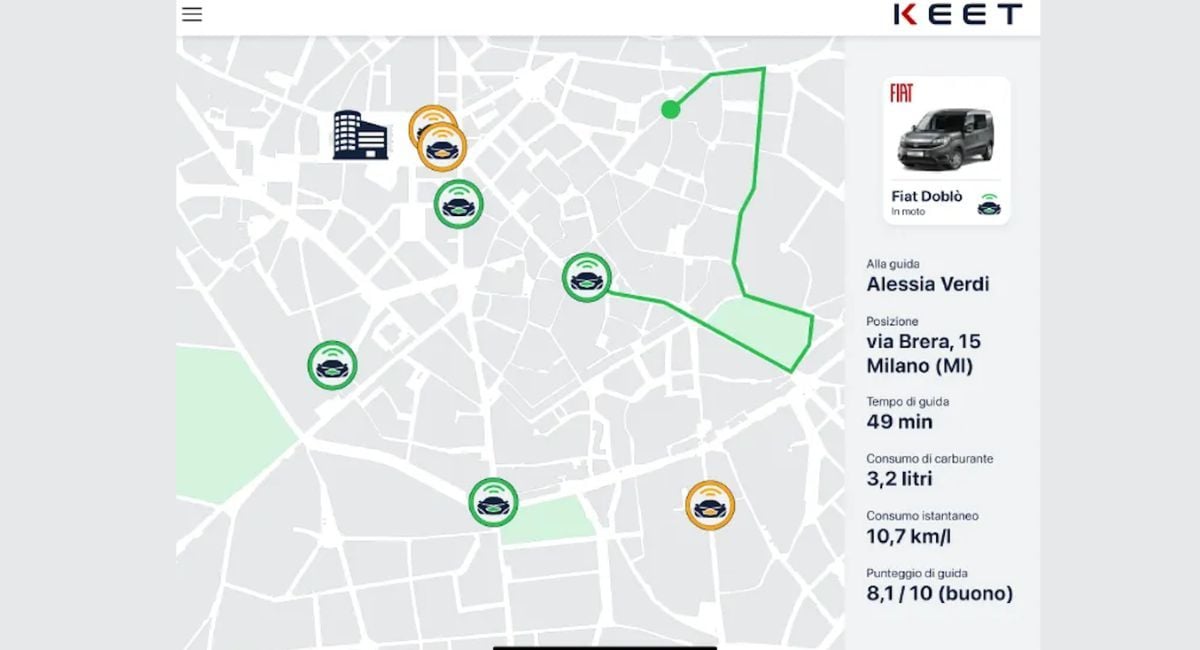
Keet (Italy / funding not disclosed)
A lightweight AI fleet-management application delivering fuel-saving tips, smart alerts, and driver-risk detection. Designed for simplicity, Keet surfaces actionable insights directly to drivers and fleet managers without requiring complex hardware changes.
Role in FM: Keet targets small and mid-sized fleets looking to reduce fuel spend and driver risk without heavy IT overhead. Its focus on eco-driving nudges and contextual safety alerts positions it as an accessible, sustainability-first fleet intelligence tool.
How They Use AI: Keet uses AI to analyse driving patterns and identify inefficiencies – excessive idling, hard acceleration, suboptimal route choices – then pushes personalised fuel-saving coaching to drivers in real time. Risk-scoring algorithms flag high-risk behaviours and generate alerts before they translate into incidents or cost overruns.
4. Sustainability and Fuel Optimization
AI route and behavioral models are built on historical patterns of driver behavior (idle times, driving style choices) that can be analyzed to help decrease fuel consumption as well as delivery times. In fact, many of the largest logistics providers in America have seen significant improvements in both fuel efficiency and timeliness as a result of employing dynamic route planning processes.
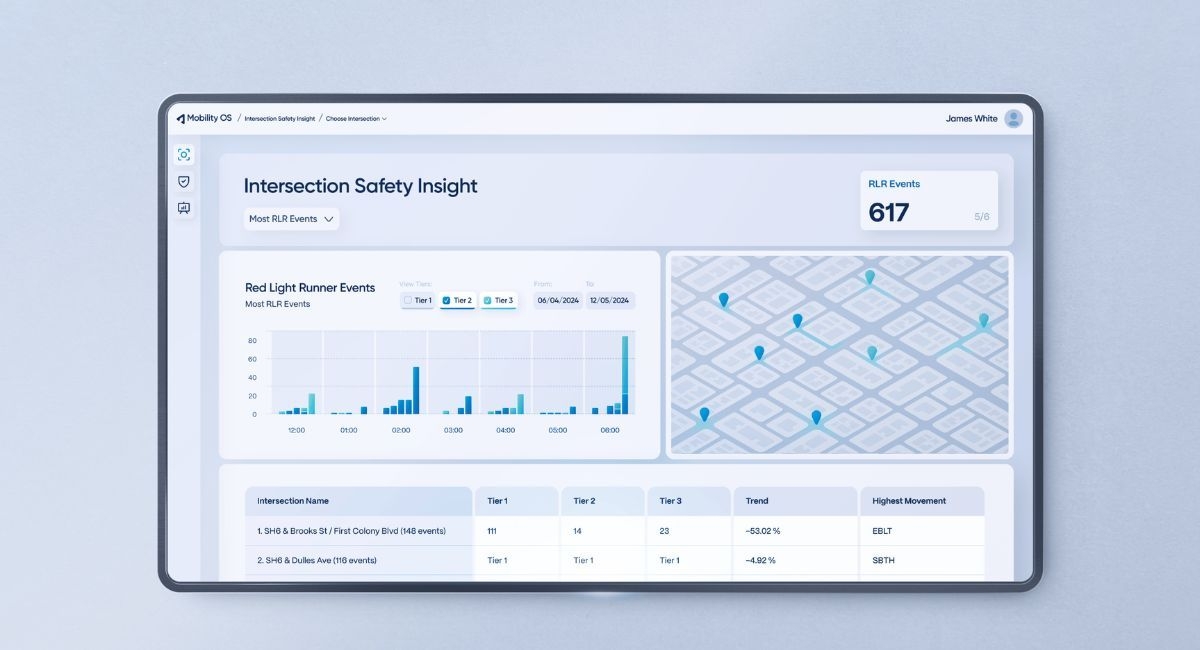
NoTraffic (Israel / $75.7M total funding)
An end-to-end AI mobility management platform that transforms signalised city intersections into a connected, autonomous, cloud-managed network. The platform combines radar and camera fusion sensors, an NVIDIA Jetson edge-computing unit installed at each intersection, and a cloud-based AI microsimulation engine – all deployable in under two hours with no road works required.
Role in FM: NoTraffic directly reduces fleet fuel consumption, idle time, and emissions by eliminating unnecessary stops at traffic signals. Its Transit Signal Priority feature automatically gives buses and emergency vehicles green lights without additional fleet hardware, cutting route times and improving schedule adherence. The platform is approved across 24+ US states and parts of Canada.
How They Use AI: NoTraffic's AI analyses thousands of signal-timing scenarios per second using live radar/camera data fused with historical traffic patterns, optimising signal coordination across entire city corridors in real time. Computer vision classifies vehicles, pedestrians, and cyclists per lane and adjusts signal timing autonomously. In a Redlands, CA pilot, the system eliminated 900 hours of resident commute time and cut 11 tonnes of vehicle emissions at just 2% of the city's signals.
Inceptio Technology (China / $678M total funding)
A full-stack autonomous driving platform for heavy-duty long-haul trucks, spanning L2+ to L4 autonomy. Inceptio integrates proprietary perception algorithms (Ultra Long Range Sensing, Adaptive Robust Control), an automotive-grade computing platform (up to 245 TOPS), fuel-efficient driving algorithms, and a drive-by-wire chassis – pre-loaded into mass-production trucks by OEM partners Dongfeng, Sinotruk, and Foton.
Role in FM: Inceptio operates the world's largest commercially deployed autonomous trucking fleet with 4,000+ L2+/L3 trucks accumulating over 400 million kilometres across China's national highway network. Its customers include JD Logistics, ZTO Express, Budweiser, and Nestlé. Inceptio trucks have delivered 20–50% labour cost reductions and 2–10% fuel savings per route, with a safety record 75–99% better than human-operated trucks, according to a joint study with CPIC insurance.
How They Use AI: Inceptio's AI handles 95–99% of total driving mileage on each route, applying real-time perception, decision-making, and control through deep learning and model predictive control. Its Inceptio Agile Iteration Loop continuously collects, processes, and refines operational data from the commercial fleet to accelerate algorithm improvement, with 5 billion commercial kilometres of training data projected by mid-2028 – the largest real-world autonomous truck dataset in the industry.
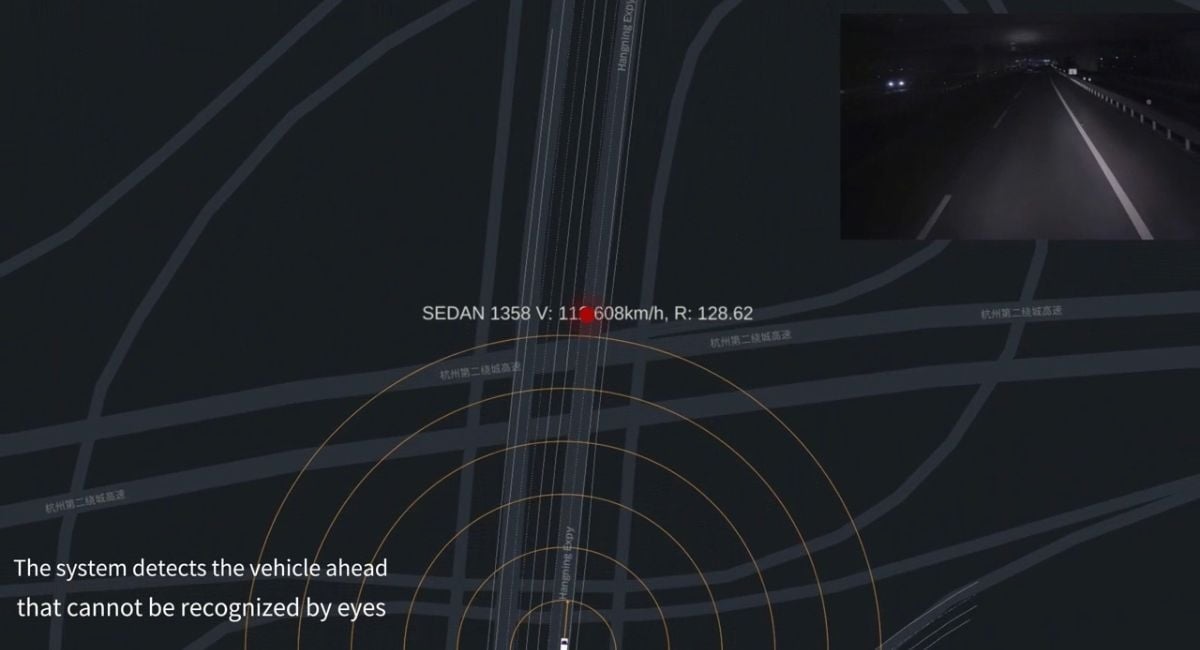
5. Real-Time Vehicle Tracking
The traditional method of tracking vehicle locations through GPS provides a fixed location and does not offer any further data related to the vehicle. With the advent of AI, fleets can now track data in real-time and acquire actionable intelligence about their fleets. For example, by combining telematics data with live and historical data about traffic patterns, AI can predict delays and alert fleet managers to real-time deviations from the best routes in their fleet. Fleet managers can therefore use this intelligence to proactively reassign vehicles or adjust routes to maintain service levels while avoiding potential problems down the road.
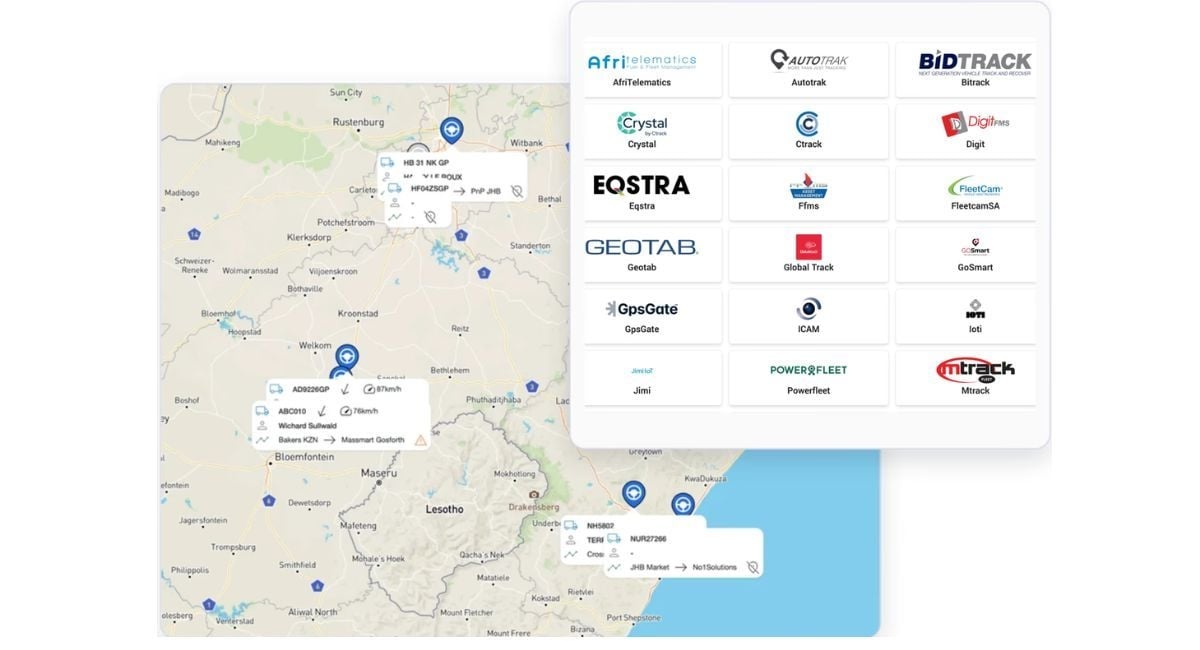
CtrlFleet (South Africa / Acquired Fleetbeacon (Mar 2024)
A centralised vehicle and driver monitoring platform consolidating GPS tracking, driver performance data, and operational reporting into a single web-based dashboard. CtrlFleet acquired Fleetbeacon in 2024 to expand its device and data-ingestion capabilities across African markets.
Role in FM: CtrlFleet provides fleet operators across Africa with real-time location awareness, driver-behaviour monitoring, and operational reporting, enabling proactive management of dispersed vehicle fleets in markets where connectivity and maintenance resources can be limited.
How They Use AI: CtrlFleet applies AI-driven analytics to driver behaviour telemetry – speed profiles, harsh-braking events, route adherence – to generate risk scores and trigger automated alerts. The platform uses pattern recognition to detect anomalies in fleet operations and surface actionable recommendations to fleet managers.
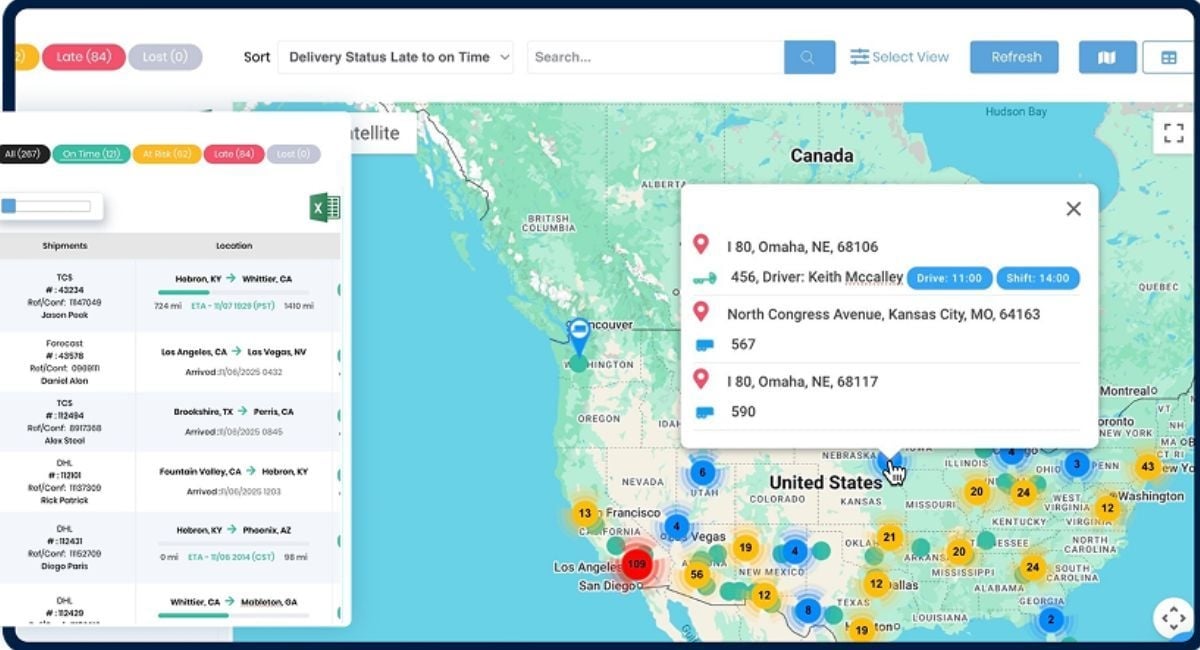
LoadStop (USA / $4.5M total funding) A digital carrier management and fleet operations platform that automates dispatch, load management, driver settlement, IFTA reporting, and document handling for trucking companies. LoadStop transforms manual, paper-based carrier workflows into a connected digital system.
Role in FM: LoadStop targets small-to-mid-sized trucking carriers that lack enterprise TMS resources. By digitising and automating core operations – from load assignment to driver pay – it frees dispatchers to focus on customer relationships and exception management rather than administrative overhead.
How They Use AI: LoadStop uses AI to automate dispatch recommendations, match available drivers to loads based on HOS, location, and carrier preferences, and flag compliance exceptions in real time. The platform analyses operational data to surface performance trends and help carriers identify inefficiencies in their networks.
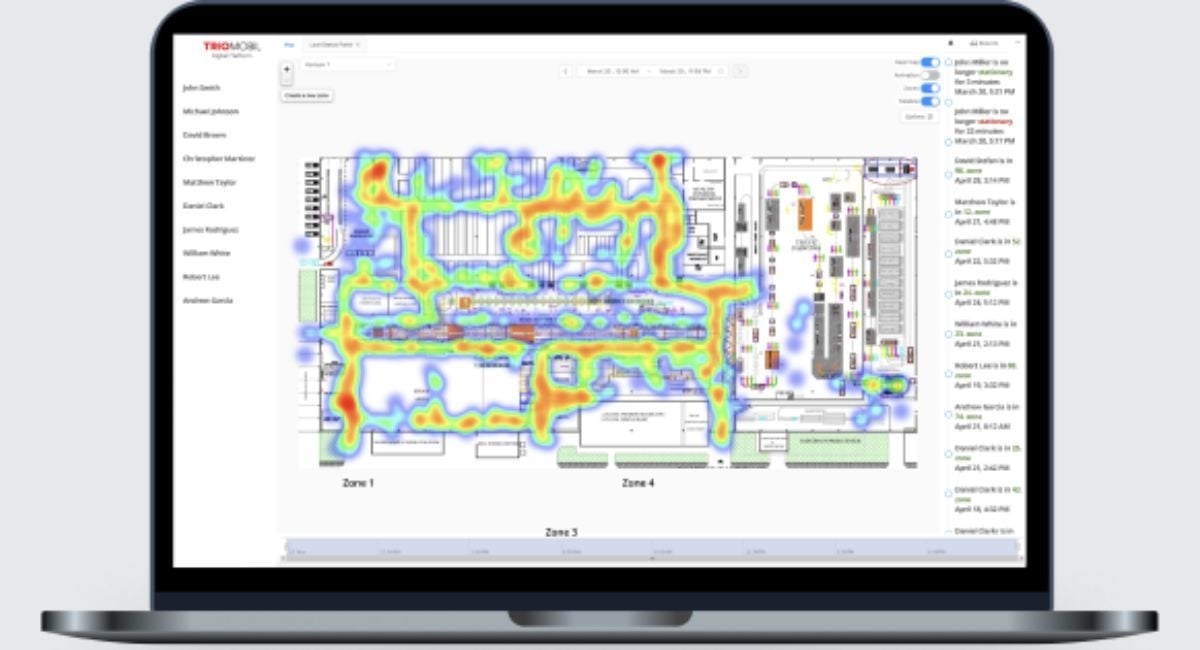
Trio Mobil (USA / $34.7M(total funding)
An IoT and AI fleet intelligence platform combining real-time vehicle tracking, driver safety systems, and forklift fleet management into a single connected ecosystem. Trio Mobil serves sectors ranging from road transport to warehouse operations, integrating hardware sensors with cloud analytics.
Role in Fleet Management: Trio Mobil bridges road-fleet telematics with indoor material-handling fleet management, giving operators unified visibility across their entire vehicle and equipment inventory. Its safety systems are designed to prevent accidents both on the road and within warehouse or industrial environments.
How They Use AI: Trio Mobil's AI and IoT layer continuously processes real-time sensor data from vehicles and forklifts to detect unsafe behaviours, trigger in-cab safety alerts, and score driver performance. AI models also analyse location and telematics streams to identify deviations, predict maintenance needs, and optimize asset utilization across mixed fleets.
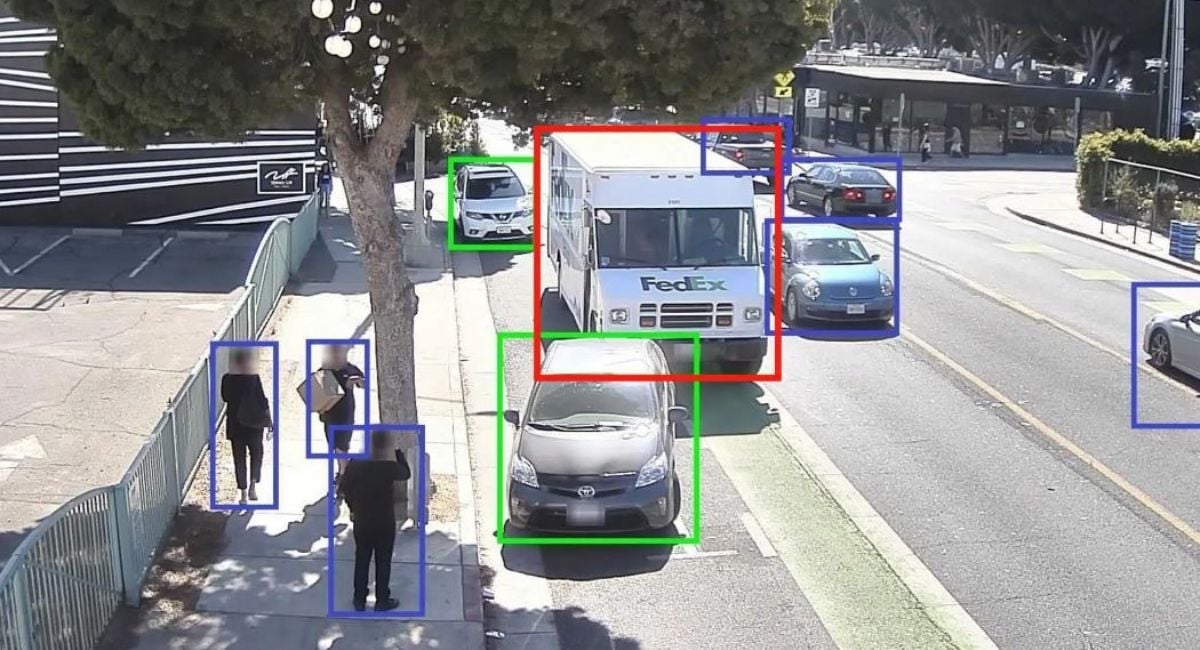
Automotus (USA / $21.8M total funding)
A computer-vision curb-management platform using AI-powered cameras to monitor parking and loading-zone activity. Automotus automates the tracking, enforcement, and billing of curb usage for cities, airports, and logistics operators – replacing manual enforcement with intelligent video analytics.
Role in FM: Automotus addresses one of the costliest pain points for urban delivery fleets: curb access and parking compliance. Automating curb monitoring, it reduces driver dwell time, eliminates parking violations, and gives fleet operators predictive data on loading-zone availability before vehicles arrive.
How They Use AI: Automotus deploys computer-vision AI to detect, classify, and track vehicles in real time at curb locations – identifying vehicle type, dwell duration, and compliance with loading-zone rules. The system automatically generates billing events and compliance reports, and feeds fleet operators with predictive curb-availability data to plan stops more efficiently.
Benefits of AI in Fleet Management
Optimizing fleet management is made possible by AI because it allows for the formation of fleet operations (e.g., routing, scheduling, etc.) into large-scale constrained optimization problems that can be solved with many sources of streaming data (e.g., telematics, GPS, etc.). The AI-based fleet management system utilizes real-time telematics, GPS paths, vehicle sensor information, signals of driver behavior, and other external factors (such as traffic and weather) to construct an end-to-end machine learning pipeline to manage a fleet of vehicles. Through predictive maintenance and estimating the remaining useful life (RUL) of each vehicle, we can prevent breakdowns before they occur and reduce the amount of time and cost associated with waiting for repairs.
Detecting unsafe driving behaviors and identifying potential new operational risks are accomplished through supervised learning models; these methods allow the identification of when drivers are conducting themselves differently from the normal behaviors associated with good, safe operation of a vehicle. Dynamic routing and dispatch for fleets can be accomplished through a combination of graph-based optimization, stochastic scheduling, and reinforcement learning in order to adaptively alter decisions when there are uncertainties and variable constraints in real-time.
By taking advantage of all the aforementioned data sources, the multi-objective optimization algorithms that have been developed allow fleet managers the ability to optimally balance competing objectives, including cost, service level, safety, energy consumption, regulatory compliance, etc., across their vehicles, routes, and drivers. AI-based fleet management systems allow for continuous learning and proactive decision-making by taking advantage of this streaming data and constant operational feedback, enabling increased levels of automated, scalable decision-making and ultimately laying the foundation for the development of self-optimizing and semi-autonomous fleet operations.
Challenges and Risks
While AI offers many opportunities to improve fleets' safety, efficiency, and cost control, it also brings with it challenges and risks. To gain the best benefits from AI, the quality of data and its integration into the fleet's operations are essential. When telematics data is noisy or fragmented, or when there are no consistent identifiers across all telematics systems, the chances of producing unreliable AI predictions are high.
The pressure created by real-time constraints requires AI systems to quickly process live data feeds and adapt to disruption in real-time without error. As fleet configuration, traffic, and demand require changes in AI models, the accuracy of AI predictions will decrease over time.
Management of optimization trade-offs, like speed/safety or utilization/maintenance, can lead to unintended effects if these trade-offs are not well-managed. Adoption and trust in AI are also big challenges; if the AI provides black-box decision-making or a lot of false alerts, drivers and dispatchers will likely not trust AI and potentially ignore its suggestions.
Privacy issues, driver behaviour monitoring, and connected telematics create added complexity as companies will need to address workforce relations, cybersecurity, and regulatory compliance, for example. Companies will need to establish specific metrics to scale AI beyond the pilot stage. They will also need to establish operational integration and a change management framework to measure and sustain ROI.
Future Trends
Fleet management will look different over the next 10 years because of advances in artificial intelligence. Some prominent trends include:
- Autonomously and semi-autonomously operated fleets that will operate without direct human oversight, with AI coordinating the most efficient and safest route and workload.
- Edge technology on board vehicles, eliminating the need for strong internet connections to make immediate routing, collision avoidance, and safety intervention decisions in real time.
- Electric vehicle (EV) fleet coordination, including charging schedules, planned routes, and battery health. AI will balance sustainability with operational goals.
- Predictive analytics will forecast delays or maintenance, and prescriptive analytics will prescribe actions in advance of downtime or suboptimal performance.
- Digital twin simulations to model and test fleet operations, optimizing KPIs, and providing a means to experiment with fleet operations without risk.
- Advanced driver coaching through the use of telematics and sensors to provide drivers with recommendations based on real-time analysis of behaviour to increase compliance, safety, and lower costs.
- Multi-modal, end-to-end optimization involving the AI coordinating fleets with other logistics methods (drones, AGVs, rail) to assess for cost, time, and sustainability across the supply chain.
- Explainable AI will allow operators to understand the rationale for AI-supplied recommendations, while confirming that operators remain accountable for their actions in compliance with regulatory standards.
- Predictive Eco-Routing and Predictive Load Optimization for AI will Reduce Energy Consumption and Fuel Usage in Meeting Environmental Sustainability Reporting (ESG).
- Fleet-as-a-Service Platforms provide AI-enabled, on-demand, and on-the-go management of shared fleet assets across all sectors, including Shared Vehicles (Mobility), Logistics, and Industrial Operations through Fleet-as-Service Business Unit Operations.
Conclusion
Intelligent fleets are undergoing a strategic change instead of just a trend in technology. AI-enabled optimization systems give organizations quantifiable improvements in cost-effectiveness, dependability, and sustainability.
By having an appropriate AI partnership and implementation strategy, fleets shift to being proactive, data-driven systems from being reactive operations, thereby opening up new opportunities for enhancements in efficiency and also business performance.
DRL Team ↗
AI R&D Center
Our team shares experiences and insights on how AI and ML change and shape new markets, optimize various industries and our lives.

Yuliya Sychikova ↗
COO @ DataRoot Labs
Yuliya is a co-founder and COO of DataRoot Labs, where she oversees operations, sales, communication, and Startup Venture Services. She brings onboard business and venture capital experience that she gained at a leading tech investment company in CEE, where she oversaw numerous deals and managed a portfolio across various tech niches including AI and IT service companies.