
Mobile telemetry analytics for field operations review
Project scope
This case covers one part of an anonymized mobile operations platform. The five cases in this series describe the same engagement. DataRoot Labs worked through a product-development partner and directly with the end client’s management.
Different workloads, different stores
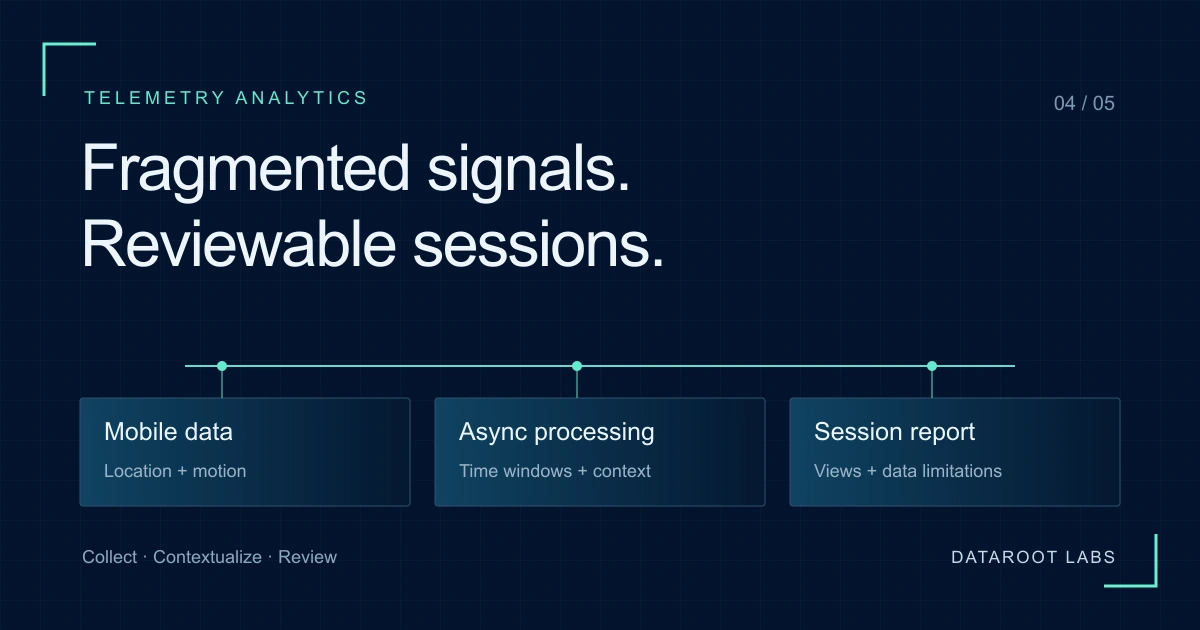
Mobile collection feeds a FastAPI backend, with Kafka supporting asynchronous processing. ClickHouse holds sensor and time-series data; PostgreSQL holds application records. This separates analytical work over observations from the transactional records used by the product.
The processing layer groups readings over time for each mobile work session. Components process the different input families, with NumPy supporting numerical processing. The combined output retains the limitations of the observations available for that session.
Making the result reviewable
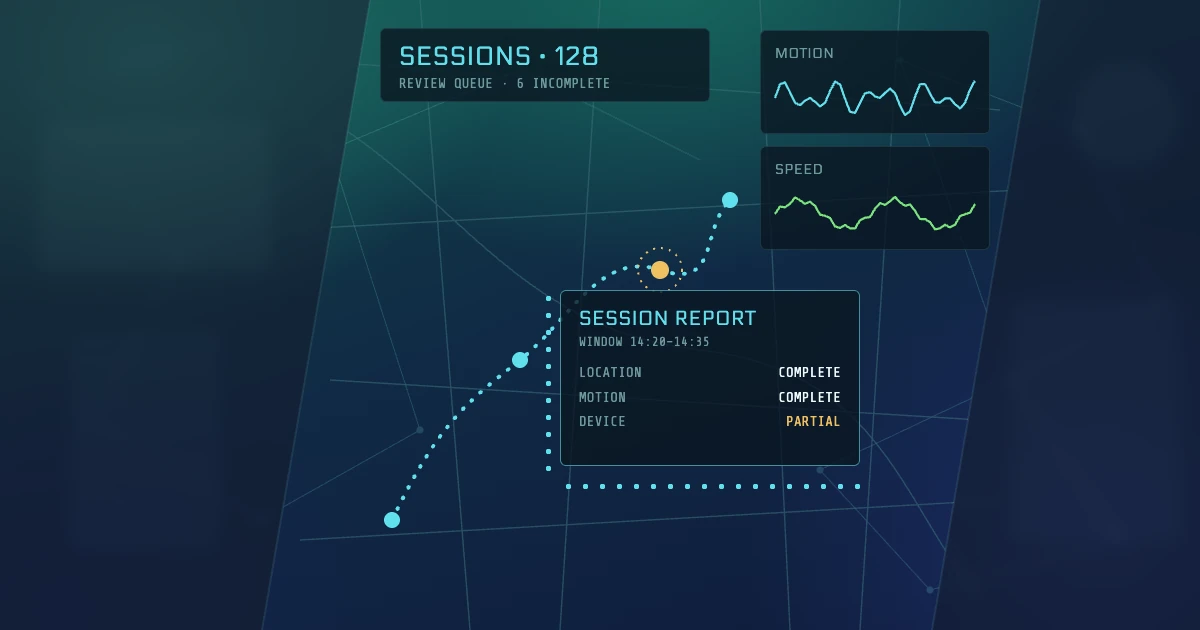
The reporting layer assembles structured results and visual material, including location and motion views. WeasyPrint renders report artifacts, which are stored in S3-compatible storage separately from application records and retrieved through the product workflow.
Collection, analysis and rendering have different failure modes. Explicit processing and reporting states make unsuccessful runs visible and allow recovery. Reports expose the incomplete-data and processing states available to reviewers, alongside the location and motion observations.
What the architecture supports
The delivered capability is a review workflow over imperfect device data. A person interprets the session summary and supporting views in context. The case does not establish automated fraud detection or a verified reconstruction of every activity.
Inspection, field service and delivery software could use this pattern, but those are potential applications rather than the disclosed sector of this engagement. Applying it elsewhere starts with the questions reviewers need to answer, the signals available and the rules for reporting incomplete sessions.
Where this applies
Potential customers include field-service and inspection platforms, delivery software vendors, and other businesses that need to review mobile sessions using imperfect device data. Adapting the pattern requires defining the operational questions, available signals, reporting rules, and human review process. Report turnaround, reviewer effort, and usable session coverage would help quantify value; this case does not claim measured savings or verified fraud-detection performance.
Published