

Luciano Guido is the CEO and Founder of Solar Outdoor Media, a Berlin-based company transforming urban waste management through IoT-powered infrastructure and renewable energy. Its flagship product, the Solar Wi-Fi Eco Bin® (SWEB®), pairs solar-powered recycling with free public Wi-Fi, real-time fill-level monitoring, AI-driven waste analytics, and digital out-of-home advertising, turning every unit into a data node for circular-economy systems. With pilot deployments and installations across multiple international markets and multiple international innovation recognitions, Solar Outdoor Media is reshaping public spaces into connected, sustainable environments aligned with the UN Sustainable Development Goals.
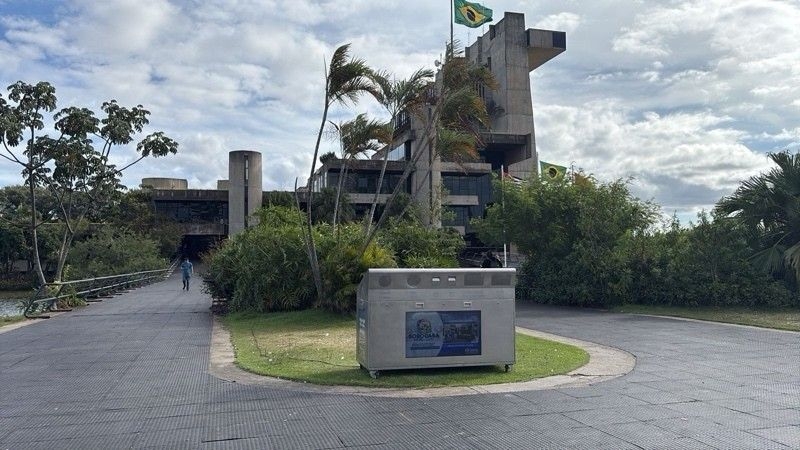
Yuliya Sychikova sits down with Luciano Guido to discuss the engineering trade-offs behind autonomous solar infrastructure, how AI adapts across very different urban environments, and where smart cities are headed in the next five years.
Yuliya Sychikova [YS]: With 50 SWEB® units across three continents and 12 global awards, what moment convinced you it could reshape urban waste collection worldwide?
Luciano Guido [LG]: The pivotal moment was Catalonia. When we first deployed SWEB units across Catalan municipalities, the response from both local governments and citizens was extraordinary. Coverage from La Vanguardia, Lleida Radio, Lleida Diari, Alcaldes EU, and Nacio Digital made it clear that the vision resonated across very different communities and levels of governance.
What solidified it for me was watching the bin become more than waste management infrastructure. It became a symbol of sustainable urban transformation, with citizens engaging with the free Wi-Fi, municipalities using real-time data to optimise routes, and environmental advocates embracing the measurable emissions reductions. Scaling from there to Germany, Toronto, and Sao Paulo proved this is not a niche solution. It is a globally scalable answer to urban sustainability challenges that transcend borders, climates, and cultures.
[YS]: What AI and ML techniques power the SWEB®’s 60% CO₂ reduction, and how does the system adapt across very different urban environments?
[LG]: We use a multi-layered ML architecture built specifically for the complexity of urban waste. The core is time-series forecasting with LSTM (Long Short-Term Memory) neural networks that analyse historical fill-level patterns combined with real-time sensor data, capturing seasonal trends, day-of-week variations, and event-driven anomalies.
Each unit's ultrasonic sensors stream data through cellular and Wi-Fi connectivity. Edge computing on the bin itself handles low-latency tasks, while cloud-based optimisation handles route planning at scale. For waste type classification, on-device processing distinguishes recyclables, organics, and general refuse, which is critical for source-based recycling.
To adapt across continents, we rely on transfer learning. A core model trained on European patterns rapidly learns local characteristics in North and South America. In Germany, the AI learns how extended freezes shift fill levels. In Brazil, it adapts to humidity's effect on waste density and decomposition. Pilot data has shown strong predictive performance in controlled deployment environments, with ongoing optimisation as datasets expand.
We are not building waste bins. We are building the data infrastructure for a sustainable planet.
[YS]: Walk us through the technical architecture and the predictive accuracy you’re achieving in real-world deployments.
[LG]: The SWEB® is a fully integrated AIoT-enabled smart city infrastructure solution. On the hardware side, each unit has ultrasonic fill-level sensors, temperature and humidity sensors to account for environmental effects on waste density, LED lighting for nighttime visibility, and an LCD screen that can display fill status or public messages.
Data flows through dual connectivity, with cellular as the primary channel and Wi-Fi as backup, so we do not lose data in urban canyons. Compression reduces bandwidth requirements significantly, which matters in low-connectivity areas. The bin handles preliminary analytics locally via edge computing, then sends data to the cloud for advanced optimisation and route planning.
In real-world deployments across Catalonia, Germany, Toronto, and Sao Paulo, early deployment analyses suggest meaningful potential route optimisation and operational efficiencies. The platform is designed to support operational cost reductions depending on deployment scale and municipal operating structures, while also reducing emissions through fewer truck deployments.
[YS]: How does the AI distinguish waste types for source-based recycling, and what’s the role of edge computing versus the cloud?
[LG]: Waste classification works in two tiers. On the device itself, lightweight neural networks handle preliminary classification in real time, distinguishing recyclables such as paper, plastic, glass, and metals, as well as organics and residual waste. That on-device classification powers immediate citizen feedback through the LCD, encouraging proper sorting in the moment.
The majority of data processing happens locally: fill-level trend analysis, anomaly detection, and preliminary waste-type scoring. This reduces cloud dependency, preserves privacy since we never transmit raw sensor data, and keeps the bin operating autonomously during connectivity outages. When the link returns, it syncs.
The cloud is where city-wide intelligence lives. It aggregates data across units, identifies waste patterns by neighbourhood, predicts seasonal demand, and optimises truck routes using genetic algorithms. Historical data supports longitudinal analysis for municipal policy decisions. Together, this hybrid model has helped municipalities improve recycling rates through targeted citizen feedback.
[YS]: Beyond environmental impact, how do you quantify ROI for a city?
[LG]: The ROI is measurable across multiple dimensions, and it has been consistent across Catalonia, Germany, Toronto, and Sao Paulo.
Direct operational savings come from meaningful reductions in collection routes and truck hours per deployment. Optimised routing also reduces fuel consumption; for a mid-sized fleet, this translates into significant diesel savings annually. These figures vary based on city size, fleet composition, and operating conditions.
There are also secondary revenue streams. Each unit functions as a digital advertising surface, generating monthly digital out-of-home advertising revenue. Because the unit is fully solar-powered, cities also eliminate the electrical costs that traditional smart bins incur.
Indicative payback scenarios may be achievable depending on commercial utilisation, advertising revenues, and operating conditions. The business model has the potential to generate attractive returns through a combination of operational efficiencies and digital monetisation, subject to deployment assumptions.
Municipalities typically achieve full capital recovery within 18–24 months, with 340–380% annual ROI from year two onward.
[YS]: What was the hardest engineering challenge in integrating solar power, connectivity, sensors, and display into a single autonomous unit?
[LG]: The hardest part was getting multiple high-power, heat-generating subsystems to live together on a single solar-powered unit. The cellular and Wi-Fi modems, the LCD and LED lighting, the sensors and processing, and the compacting mechanism all draw power simultaneously. The rooftop generates meaningful wattage in full sun, but urban shading, seasonal sun angles, and panel soiling all reduce that in practice.
We solved it in two layers. First, an MPPT charge controller that significantly improves solar extraction efficiency. Second, intelligent power-management firmware that prioritises functions by urgency: sensors and connectivity run continuously, the display and compacting run on schedule, and data gets cached during peak sun hours for transmission during low-power periods.
Thermal management was just as critical. In Sao Paulo, ambient temperatures push past 35 degrees Celsius. We added passive cooling fins and used industrial-grade components rated for a wide temperature range rather than consumer-grade parts.
The bin now operates maintenance-free across temperate, tropical, and sub-zero climates.
[YS]: How does the AI handle dynamic variables, such as weather, gatherings, and seasonal swings, that alter waste generation?
[LG]: We use an ensemble approach because no single model handles urban waste's unpredictability well.
For anomaly detection, we run isolation forests and statistical process control to flag extraordinary events such as weather anomalies, festivals, university breaks, and emergencies. The system maintains a calendar of local events integrated with municipal databases, which lets the AI adjust baseline predictions during known high-impact events. In Spain, for example, waste volumes can spike significantly during summer festivals, and the models forecast accordingly.
The core innovation is that the system retrains continuously using sliding-window validation. When Toronto came online in December, the system needed only a few weeks to learn how winter precipitation affects waste, which is considerably faster than traditional models would achieve.
We also generate probabilistic forecasts with confidence intervals rather than single-point predictions, and we use reinforcement learning so the network keeps tuning its collection policies based on actual outcomes. Pilot data has continued to show strong predictive performance even when unusual events appear post-deployment.
[YS]: Which emerging technologies, such as computer vision, federated learning, and digital twins, will be the real game-changers for smart cities in the next five years?
[LG]: These are exactly the areas we are actively developing, and it is worth distinguishing between what is operational today and what is on our roadmap.
Current operational capabilities: Sensor-based fill monitoring, remote connectivity and diagnostics, analytics dashboards, on-device waste classification, and route optimisation logic are all live across our deployments.
The following represent our technology roadmap:
Computer vision for granular waste sorting is already piloting in Catalonia, classifying categories such as PET plastics, aluminium, paper, and organics. Beyond improving recycling rates, it creates a feedback loop with citizens while generating high-confidence training data.
Federated learning architectures are our 2025 to 2026 development priority. Instead of centralising data in the cloud, each bin would train local models and share only model updates with the network. That preserves municipal privacy, reduces bandwidth requirements, accelerates learning, and unlocks new capabilities such as bin-to-bin anomaly detection.
Digital twin simulation will let cities simulate scenarios before deployment, testing routing algorithms and predicting bin placement impacts in a physics-based environment. By 2027, we expect this to meaningfully reduce deployment risk.
Adaptive machine learning enhancements will enable increasingly automated operational recommendations and adaptive optimisation over time.
The bigger picture is integration with broader smart city ecosystems: refuse trucks become part of intelligent traffic routing, collection patterns correlate with air quality, and bin usage patterns can signal early environmental trends. By 2030, the Solar Wi-Fi Eco Bin will not just be an AI-enabled smart urban infrastructure platform. It will be a cornerstone of intelligent, adaptive, self-optimising cities powered by distributed renewable energy.
Selective international expansion is ongoing, aligned with strategic municipal and commercial partnerships.

Yuliya Sychikova ↗
COO @ DataRoot Labs
Yuliya is a co-founder and COO of DataRoot Labs, where she oversees operations, sales, communication, and Startup Venture Services. She brings onboard business and venture capital experience that she gained at a leading tech investment company in CEE, where she oversaw numerous deals and managed a portfolio across various tech niches including AI and IT service companies.