
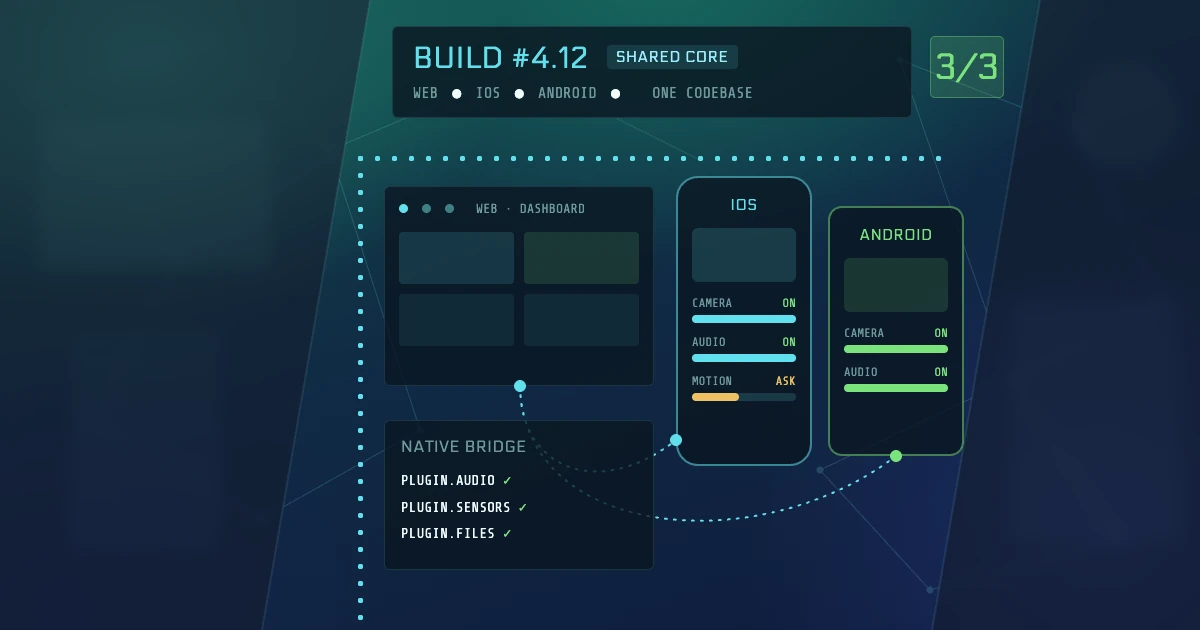
Cross-platform field operations app with native iOS and Android capabilities
Project scope
This case covers one part of an anonymized mobile operations platform. The five cases in this series describe the same engagement. DataRoot Labs worked through a product-development partner and directly with the end client’s management.
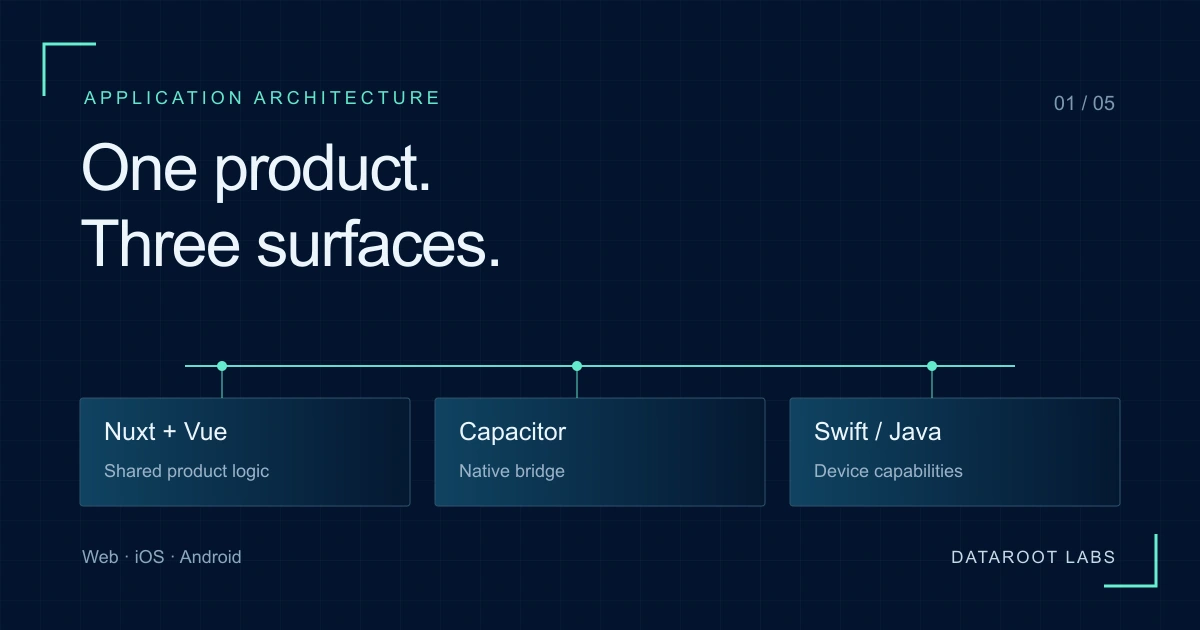
Coordinating a mobile session
The tracking controller brings permission state, device context, audio availability and synchronization into the session lifecycle. Starting or ending a session therefore coordinates several modules. Returning from the background also has to account for capabilities that may have changed while the app was inactive.
Native configuration and build paths remain separate. That keeps operating-system differences visible to the engineering team when an interruption or permission change affects the shared workflow.
Two release paths
For HTML, CSS and JavaScript changes compatible with the installed native app and applicable store requirements, the app checks its installed version with the backend and downloads an eligible bundle. The self-hosted integration uses Capawesome Live Update to prepare and apply it, track download and application events, and restore the previous screen where possible after reload.
Changes to native plugins, permissions or dependencies follow the regular native build and store-release workflow. Live updates reduce the steps needed to distribute eligible frontend changes; they do not replace native releases or establish a measured release-time improvement.
Where this applies
This approach is relevant to field-service software vendors, inspection platforms, and enterprise teams extending an existing web product to mobile data capture. A similar implementation would need to account for the customer's device capabilities, permissions, backend contracts, and release requirements. Local voice activation and recoverable synchronization are described in separate cases.
Published