
AI conversation quality assessment and personalized coaching
Project scope
This case covers one part of an anonymized mobile operations platform. The five cases in this series describe the same engagement. DataRoot Labs worked through a product-development partner and directly with the end client’s management.
Finding the relevant conversation
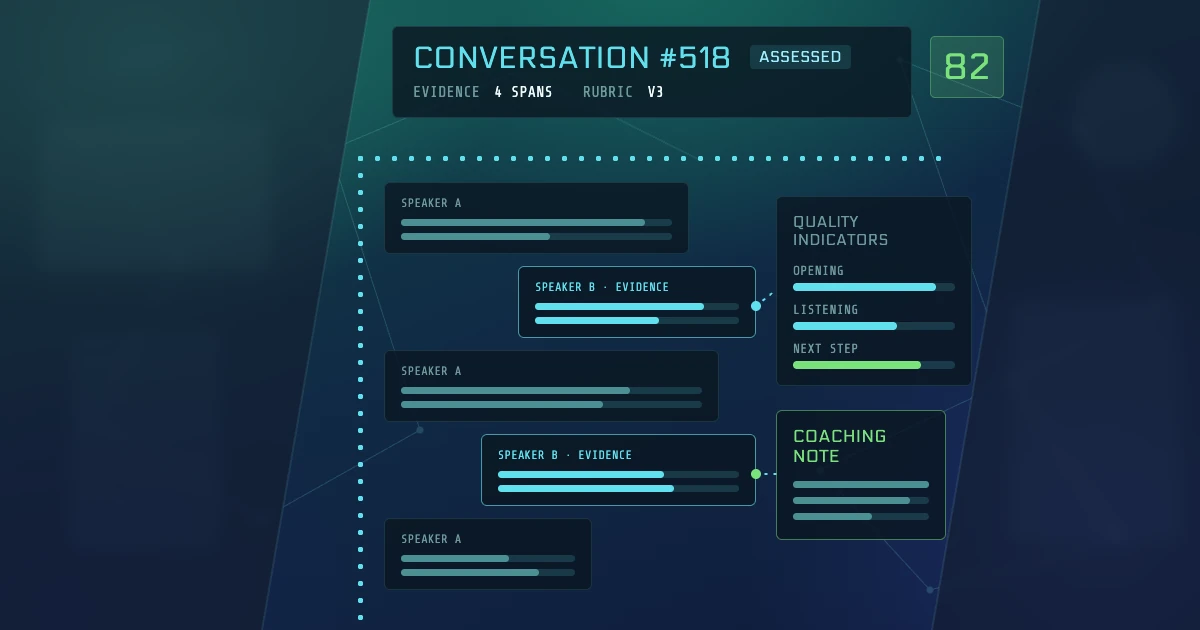
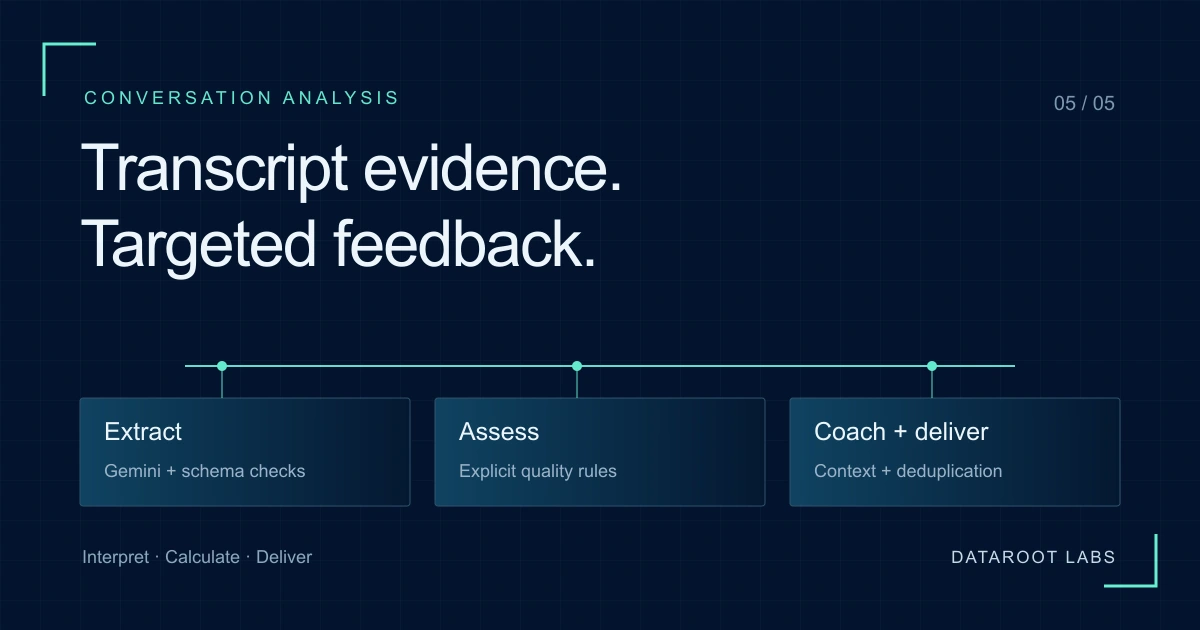
The pipeline starts with a speaker-labeled transcript. Gemini extracts observations in a defined schema and identifies the portion of the transcript to assess. Pydantic validates the structured output, while span checks reject invalid references instead of silently adjusting them to fit the transcript.
This matters when a transcript includes background dialogue or material outside the conversation being assessed. Invalid or missing required evidence follows a failure path. A response that passes structural checks still needs appropriate interpretation; validation alone does not make its conclusions true.
Keeping the rubric explicit
A separate calculation layer converts extracted evidence into configurable quality indicators. Product and quality teams can change those definitions without making a single model response responsible for both interpreting language and applying every scoring rule.
For coaching, dedicated analyzers organize conversation assessments together with available session and aggregate performance context. The generation stage then uses those sections to produce personalized feedback. Extraction instructions and coaching instructions can be revised independently.
Handling delivery retries
Kafka coordinates asynchronous workflow stages, PostgreSQL persists conversation and feedback records, and Supabase-backed messaging delivers the result inside the application. A deduplication key lets a repeated delivery attempt refer to the same coaching result instead of creating an unnecessary second message.
The implementation connects assessment with delivery. Representative transcripts and human review are needed to evaluate assessment quality. Whether the feedback changes work outcomes requires a separate evaluation. This case does not claim measured gains in sales, review time or coaching quality.
Where this applies
Potential customers include customer-support platforms, contact-center quality teams, and service businesses developing conversation-based training tools. A new deployment would need its own quality rubric, representative transcripts, evaluation against human reviewers, and feedback-delivery workflow. Agreement with reviewers, review effort, and feedback usefulness should be measured before claiming better coaching outcomes, time savings, or increased sales.
Published